


What's Happening?
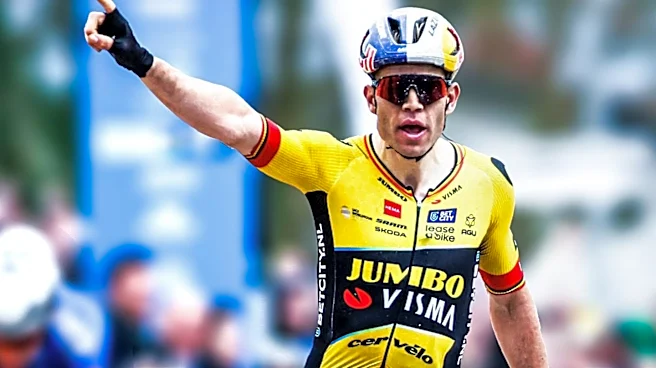
Visma-Lease a Bike has unveiled its team for the upcoming Vuelta a España, featuring a strong lineup with Wout van Aert, Matthew Brennan, and former race winner Sepp Kuss. Wout van Aert is making his return to Grand Tour racing after an elbow injury sustained
in a June training crash forced him to miss the Tour de France. This season, Van Aert has secured seven victories, including Paris-Roubaix and two stages at the Tour Auvergne-Rhône-Alpes. His most recent competition was on gravel, where he placed second in the Belgian Nationals. The team anticipates Van Aert will target hillier and transition stages, as well as the opening 9.4km time trial in Monaco, with a potential run for the green points jersey. Matthew Brennan, a 21-year-old Briton, is expected to be the team's primary sprinter for flatter stages and is also a strong breakaway candidate, having recently won two stages at the Vuelta a Burgos. American climber Sepp Kuss, the 2023 Vuelta champion, will serve as the team's main General Classification (GC) option, though a repeat victory is not anticipated as he has already completed two Grand Tours this season, supporting Jonas Vingegaard.
Why It's Important?
The composition of the Visma-Lease a Bike team for the Vuelta a España is significant for several reasons. Wout van Aert's return to a Grand Tour after injury will be closely watched, as his performance could indicate his recovery and readiness for future high-stakes races. His versatility in targeting various stage types, including time trials and hilly stages, makes him a key player for the team's strategy. Matthew Brennan's inclusion highlights the team's focus on developing young talent and securing stage wins in sprint finishes, which are crucial for team visibility and sponsor engagement. Sepp Kuss's role as the GC leader, despite having already completed two Grand Tours, underscores the team's ambition to contend for overall victory while also managing rider fatigue and strategic objectives. The team's approach of balancing GC aspirations with stage-hunting opportunities, especially with a rider like Kuss who has a proven track record, demonstrates a calculated strategy to maximize their chances across different aspects of the race. This strategy could influence how other teams approach the Vuelta, potentially leading to more dynamic racing as teams vie for both overall standings and individual stage honors.
What's Next?
The Visma-Lease a Bike team will now focus on the upcoming Vuelta a España, where their performance will be closely scrutinized. Wout van Aert's form and ability to compete for stage wins and potentially the green jersey will be a major point of interest, especially given his recent injury. Matthew Brennan will aim to capitalize on sprint opportunities and breakaways, further establishing his presence in the professional peloton. Sepp Kuss will attempt to balance his GC ambitions with supporting his teammates and potentially securing another stage win, as he did in the Giro. The team will also be looking to mentor promising young rider Jørgen Nordhagen in his first Grand Tour. The collective performance of the team, particularly in how they manage their diverse objectives—from GC contention to stage victories—will be a key narrative throughout the race. Their results will provide insights into the effectiveness of their strategy and the individual form of their star riders as the cycling season progresses.
Beyond the Headlines
The selection of the Visma-Lease a Bike team for the Vuelta a España reflects broader trends in professional cycling, particularly the increasing emphasis on team depth and strategic flexibility. The inclusion of riders like Van Aert, who can target multiple types of stages, alongside a GC contender like Kuss and a sprinter like Brennan, showcases a multi-pronged approach to Grand Tour racing. This strategy moves beyond solely focusing on a single GC leader, allowing the team to pursue various objectives simultaneously and adapt to race dynamics. Furthermore, the decision to have Kuss, a former winner, ride his third Grand Tour of the season highlights the physical and mental demands placed on elite cyclists and the strategic choices teams make regarding rider management and peak performance. The integration of young talent like Nordhagen into a Grand Tour lineup also points to a long-term development strategy, ensuring a pipeline of future contenders. This approach could set a precedent for other teams, influencing how they build their rosters and plan for major races, ultimately contributing to more competitive and unpredictable Grand Tours.