



What's Happening?
Marathon Petroleum has announced the sale of some of its refineries, which will result in the company operating 11 refineries with a total capacity of 2.8 million barrels per day. This strategic move ensures Marathon Petroleum remains the largest domestic
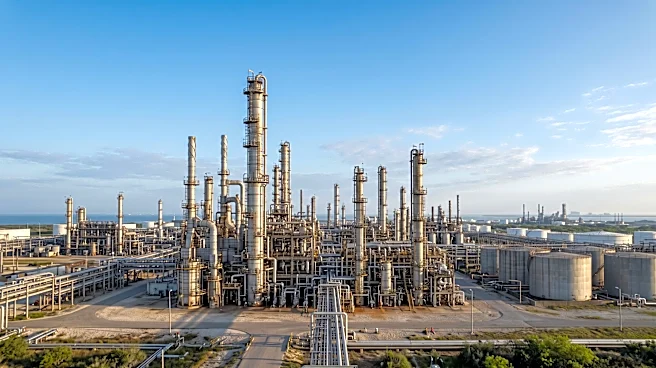
refiner by capacity, despite a 6% reduction in system capacity from the loss of St. Paul Park and Mandan refineries. The company plans to reinvest the $3.45 billion in proceeds from the $4.2 billion deal into its Gulf Coast operations, where it identifies significant long-term growth potential. The remaining $750 million will go to MPLX, a subsidiary, to support growth in its Permian and Marcellus assets. Marathon Petroleum currently operates two of the nation’s largest refineries on the Gulf Coast: the 630-Mb/d Galveston Bay refinery in Texas City and the 617-Mb/d Garyville refinery in Louisiana. These two facilities, capable of processing a wide range of crude qualities, will account for approximately 45% of Marathon’s total crude capacity after the sale.
Why It's Important?
This divestiture and reinvestment strategy by Marathon Petroleum is significant for the U.S. energy sector, particularly for the Gulf Coast region. By consolidating its operations and focusing on its largest and most versatile refineries in the Gulf Coast, Marathon Petroleum aims to enhance efficiency and capitalize on areas with the highest growth potential. This move could lead to increased investment and job creation in the Gulf Coast, while potentially shifting the refining landscape in other regions. The decision to retain substantial Midcontinent capacity, alongside the Gulf Coast focus, indicates a strategic balance between regional market demands and long-term growth opportunities. For MPLX, the allocation of $750 million will bolster its Permian and Marcellus assets, which are crucial for the nation's natural gas and oil production, thereby impacting the broader energy supply chain and pricing dynamics.
What's Next?
Following the sale, Marathon Petroleum is expected to proceed with its reinvestment plans in its Gulf Coast operations. This will likely involve upgrades, expansions, and technological advancements at its Galveston Bay and Garyville refineries to further optimize their processing capabilities and efficiency. MPLX will also move forward with utilizing its portion of the proceeds to support growth in its Permian and Marcellus assets, which could lead to increased infrastructure development and production in those key regions. The market will be watching for further announcements regarding specific projects and timelines for these investments. The company's continued dominance in domestic refining capacity suggests it will remain a major player in influencing U.S. fuel supply and pricing.
Beyond the Headlines
The strategic shift by Marathon Petroleum highlights a broader trend within the U.S. energy industry towards optimizing asset portfolios and focusing on regions with competitive advantages and growth prospects. The Gulf Coast, with its extensive infrastructure and access to diverse crude supplies, continues to be a critical hub for refining operations. This move could also signal a long-term commitment to refining complex crude grades, which are becoming more prevalent. The reinvestment in Gulf Coast operations could also have environmental implications, as modernizing refineries often involves adopting more efficient and less polluting technologies. Furthermore, the increased focus on Permian and Marcellus assets by MPLX underscores the ongoing importance of these shale plays in meeting U.S. energy demands and their role in the global energy market.