

What's Happening?
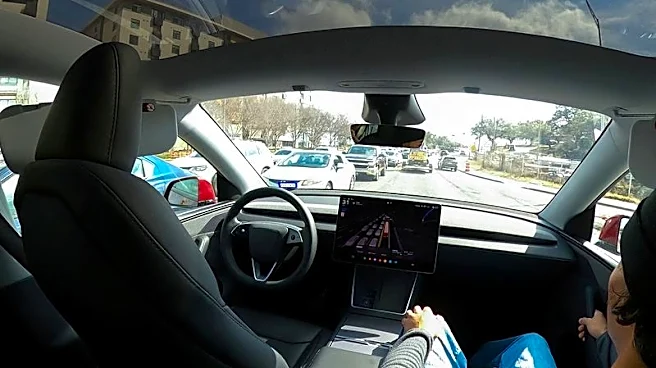
A former Tesla manager, Javier Medrano, has filed a wrongful-termination lawsuit against Tesla, alleging that the company's Houston robotaxi test fleet was dangerously understaffed, leading to safety hazards on public streets. Medrano claims that he was the sole
operational manager for the Houston program, overseeing 38 vehicles and operators, which he argues was a dangerous ratio far exceeding Tesla's safety baseline. The lawsuit, filed in Houston federal court, details how the understaffing led to extreme exhaustion among test drivers, who worked long hours and were on-call through weekends. Medrano alleges that his requests for additional staffing were met with a performance ultimatum rather than support, and he was ultimately fired in May 2025. The lawsuit comes amid reports of Tesla's robotaxis logging a high number of collisions in Texas, raising questions about the safety of the program.
Why It's Important?
The lawsuit highlights significant safety concerns within Tesla's autonomous vehicle testing program, which could have broader implications for the company's reputation and regulatory scrutiny. If Medrano's allegations are proven, it could indicate systemic issues in Tesla's approach to safety and staffing, potentially affecting public trust and investor confidence. The case also underscores the challenges faced by companies in scaling autonomous vehicle operations while ensuring safety and compliance with regulatory standards. The outcome of this lawsuit could influence future regulatory policies and industry practices regarding autonomous vehicle testing and deployment.
What's Next?
The lawsuit is likely to proceed through the legal system, with Tesla expected to respond to the allegations. The case could lead to increased regulatory scrutiny of Tesla's autonomous vehicle operations, particularly in Texas, where the company has faced criticism for its safety record. Depending on the outcome, Tesla may need to reassess its staffing and safety protocols to address the concerns raised in the lawsuit. The case could also prompt other companies in the autonomous vehicle industry to review their own practices to avoid similar legal challenges.