



What's Happening?
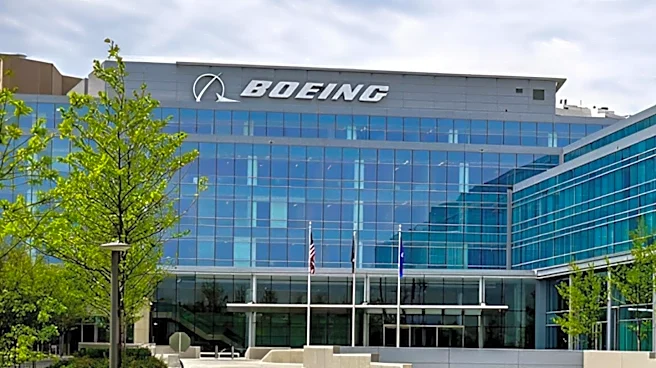
Boeing is implementing a 5% reduction in its commercial airplane workforce, affecting approximately 2,500 employees. This decision comes as the company faces slower-than-expected production recovery in its commercial airplanes unit, particularly for the 737
Max model. The reductions will occur through a combination of attrition and involuntary layoffs, with notifications beginning in December. Stephanie Pope, head of the commercial aircraft unit, informed employees that revised production schedules and lower aircraft output have led to the division being overstaffed relative to its updated business plan. CEO Kelly Ortberg previously indicated that a significant ramp-up of 737 Max output is not anticipated until the second half of 2027, a later projection than initially planned. Boeing aims to stabilize 737 Max production at 47 aircraft per month and targets 52 per month only in the latter half of 2027. As of the end of 2025, the commercial division employed about 50,500 people. The company's commercial airplanes business has been experiencing persistent losses, with the unit reporting an operating loss of $697 million on $10.7 billion in revenue during the third quarter of 2026.
Why It's Important?
This workforce reduction at Boeing signals ongoing challenges within the U.S. aerospace manufacturing sector and has significant implications for the company's financial performance and its supply chain. The slower production recovery of the 737 Max, a key revenue driver, directly impacts Boeing's ability to meet delivery targets and generate free cash flow. The cuts reflect a recalibration of the company's operational capacity to align with revised production realities, which could affect investor confidence and the company's stock performance. For the broader U.S. economy, job reductions at a major industrial player like Boeing can have ripple effects on local economies where its facilities are located, impacting employment rates and consumer spending. Furthermore, the persistent losses in the commercial airplanes business highlight the pressures from supply-chain costs, delivery mix, and elevated expenses, which are common challenges across the manufacturing industry. This situation underscores the complexities of managing large-scale industrial production amid fluctuating demand and supply chain disruptions.
What's Next?
Boeing is expected to begin notifying affected employees of layoffs in December, initiating a period of transition for its workforce. The company will continue its efforts to stabilize the production rates for the 737 Max, with a critical focus on achieving the revised target of 47 aircraft per month in early 2027 and subsequently 52 per month in the latter half of 2027. Investors and analysts will closely monitor Boeing's quarterly earnings reports for updates on production milestones, financial performance, and any further adjustments to its workforce or production outlook. The company's ability to manage supply chain issues and control costs will be crucial in determining its path to profitability in the commercial airplanes segment. Additionally, the aerospace industry will be watching for any broader impacts on supplier networks and the competitive landscape, as Boeing's challenges could create opportunities or pressures for other manufacturers.
Beyond the Headlines
The workforce reduction at Boeing extends beyond immediate financial and operational concerns, touching upon broader themes of industrial resilience and the future of U.S. manufacturing. The delays in 737 Max production, exacerbated by supply chain issues and quality control challenges, highlight the intricate dependencies within the global aerospace ecosystem. This situation could prompt deeper scrutiny into manufacturing processes, supplier relationships, and workforce training within the industry to prevent similar disruptions. Ethically, the layoffs raise questions about corporate responsibility during periods of economic adjustment and the support systems available for affected employees. Long-term, these challenges could accelerate the adoption of advanced manufacturing technologies and automation to enhance efficiency and reduce reliance on manual labor, potentially reshaping the skill sets required in the aerospace workforce. The ongoing struggles also underscore the importance of robust risk management strategies for large corporations operating in highly complex and regulated sectors.