







What's Happening?
Spain, the world's leading producer of olive oil, has ordered its producers to begin stockpiling 12% of their supplies. This directive, announced by the country's Directorate-General for Agricultural Production and Markets, aims to prevent future shortages
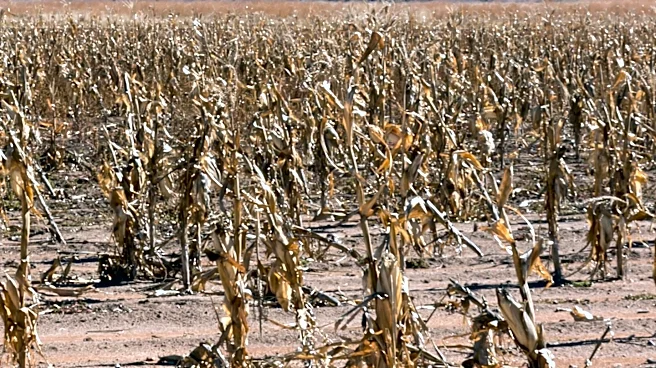
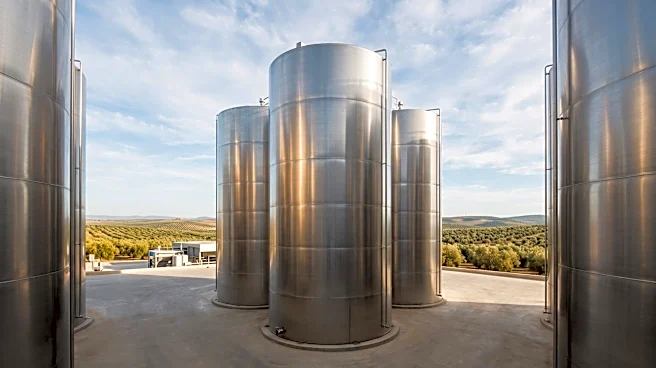
and mitigate extreme price fluctuations for the essential cooking ingredient. The stockpiling measure is effective immediately, requiring producers to hold back olive oil in their own facilities or third-party silos until September 30. This action comes after years of poor harvests across Europe due to droughts and heatwaves. However, this year's conditions have been favorable, with mild temperatures and abundant spring rains, leading the Ministry of Agriculture, Fisheries and Food to predict the fourth-best harvest on record. The ministry anticipates a 23% larger harvest than last year, which would likely drive down prices without intervention. The government is utilizing powers introduced in 2021, activated when production is expected to exceed the six-year average by 20% or more. The Coordinating Committee of Farmers' and Livestock Breeders' Organizations has welcomed the move.
Why It's Important?
This move by Spain has significant implications for the global olive oil market, including potential indirect effects on U.S. consumers and importers. As Spain accounts for approximately 45% of the world's olive oil production, its supply management strategies directly influence international prices and availability. By stabilizing its domestic market, Spain aims to prevent scenarios where olive oil prices become prohibitively high for consumers or too low for growers, ensuring economic stability within its agricultural sector. For the U.S., which imports a substantial amount of olive oil, this could mean more predictable pricing and supply, reducing volatility caused by climate-induced production swings. While the immediate impact is on Spanish producers, the long-term effect could be a more stable global supply chain, benefiting U.S. food industries and consumers who rely on olive oil. The measure also highlights the increasing role of government intervention in agricultural markets to counter climate change impacts and ensure food security.
What's Next?
Spanish olive oil producers are now required to immediately begin holding back 12% of their current harvest, with the stored oil to remain off the market until September 30. This will likely lead to a more controlled release of supply into the market over the coming months, aiming to prevent a sharp price decline that would otherwise occur due to the bumper harvest. The success of this initiative will be closely watched by other agricultural nations and commodity markets as a model for managing supply in the face of climate variability. Stakeholders, including olive oil importers and distributors in the U.S., will monitor how these measures affect global prices and availability in the medium term. Future decisions on stockpiling or market intervention will likely depend on the success of this current effort and subsequent harvest forecasts, potentially leading to similar actions in future years if production volatility continues.
Beyond the Headlines
This mandated stockpiling by Spain underscores a growing global trend where governments are taking more direct roles in managing agricultural commodities, particularly in response to climate change and its impact on food production. The use of previously unused powers from 2021 highlights a proactive shift towards strategic reserves and market stabilization rather than reactive measures. This could set a precedent for other countries facing similar challenges with staple crops, potentially leading to broader adoption of such policies to ensure food security and protect agricultural economies. Ethically, it raises questions about market freedom versus state intervention in ensuring fair prices for both producers and consumers. Environmentally, it acknowledges the direct link between climate change (droughts, heatwaves) and agricultural output, pushing for adaptive strategies to maintain supply chain resilience in a volatile climate future.