







What's Happening?
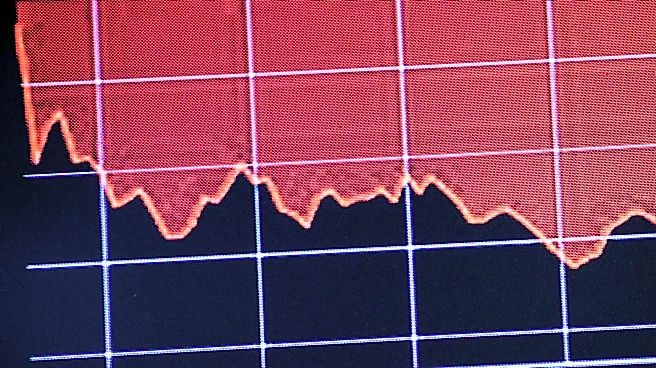
Opendoor Technologies Inc. (OPEN) experienced a significant stock drop of 22.1% after releasing its third-quarter financial results. The online real estate company, known as an iBuyer, reported a GAAP net loss of $218 million, or $0.23 per share, which
was substantially worse than the $90 million loss, or $0.12 per share, reported in the same quarter last year. Analysts had anticipated a loss of only $0.15 to $0.16 per share. Quarterly revenue reached $1.022 billion, an increase of 12% year-over-year, but it fell short of analyst estimates ranging from $1.06 billion to $1.09 billion. The company's gross margin also declined from 7.2% a year ago to 3.7%, partly due to a $53 million valuation write-down on homes in its inventory. Furthermore, Opendoor's management projected an adjusted EBITDA loss between $70 million and $85 million for the fourth quarter, a figure much higher than the roughly $16 million loss analysts had modeled. CEO Kaz Nejatian acknowledged that the company is behind schedule on its goal to achieve positive adjusted net income by the end of 2026.
Why It's Important?
The financial performance of Opendoor is critical for the broader real estate technology sector, particularly for companies employing the iBuying model. This model relies heavily on balance sheet turnover and stable home values. The reported wider net loss, reduced gross margins, and significant inventory write-downs highlight the vulnerabilities of this business model in a challenging housing market. With mortgage rates remaining above 7%, homebuyer activity has been sluggish, forcing Opendoor to offer larger discounts to sell its inventory. This situation raises concerns about ongoing cash burn and the company's path to profitability. The decline in Opendoor's stock and the reiteration of a 'Sell' rating by Goldman Sachs with a $1.00 price target indicate a lack of investor confidence in the company's immediate financial outlook. The company's struggle to meet profitability targets despite revenue growth suggests that operational efficiencies and market conditions are significantly impacting its financial health, potentially influencing investment decisions across the real estate tech industry.
What's Next?
Investors will closely monitor Opendoor's fourth-quarter and full-year 2026 earnings report, expected in mid-February 2027, to see if the company meets its revenue guidance of over $1.03 billion and limits its adjusted EBITDA loss to the projected $70 million to $85 million range. Federal Reserve interest rate decisions will also be a key factor, as any changes in benchmark rates directly influence mortgage rates and, consequently, home sales activity. Monthly existing home sales reports from the National Association of Realtors will provide insights into nationwide home transactions, which could indicate whether Opendoor can sell its inventory faster without further price cuts. A crucial metric to watch will be the company's inventory turnover and holding times; a decline in the percentage of homes on the market for over 120 days would signal improved market clearance. The company's ability to navigate prolonged high mortgage rates and avoid additional inventory write-downs will be critical for its financial stability and potential recovery.
Beyond the Headlines
The challenges faced by Opendoor extend beyond immediate financial results, touching upon the fundamental viability of the iBuying model in volatile housing markets. The company's reliance on algorithms for home valuation and rapid resale is being tested by external economic pressures, such as high mortgage rates and reduced buyer demand. This situation prompts a deeper examination of how technology-driven real estate models can adapt to market downturns. The significant inventory write-downs and declining gross margins suggest that even sophisticated AI-powered underwriting models may struggle to accurately predict market shifts and property values in rapidly changing environments. The long-term implications could include a re-evaluation of risk management strategies within the iBuying sector, potentially leading to more conservative acquisition practices or a greater emphasis on capital-light models. The ongoing struggle for profitability also raises questions about the sustainability of rapid growth strategies in real estate without a robust buffer against market fluctuations.