




What's Happening?
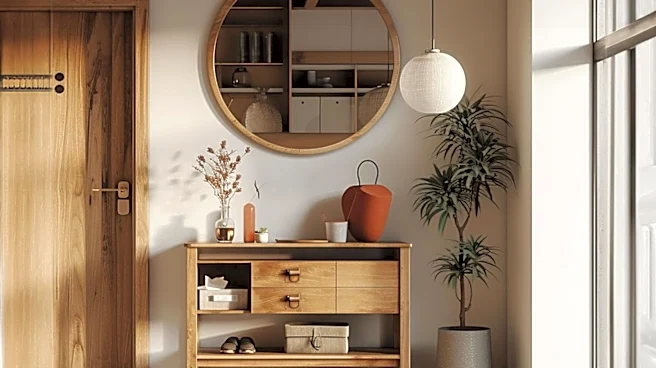
As summer transitions to fall, U.S. households are experiencing an increase in clutter, particularly in 'hotspot' areas like main entryways and kitchen countertops. Professional organizers Aurelia Duke, founder and CEO of Clutter Cutter, and Beata Kozlowski,
owner of Tidy By Step Organizing, note that the shift to busier schedules with school and sports activities often leads to household chores, including organizing, being postponed. This delay allows items such as shoes, coats, backpacks, and paperwork to accumulate rapidly. Duke explains that once one surface becomes full, clutter tends to spill over into other areas, creating a visually unappealing and mentally exhausting environment. The influx of new seasonal items and school supplies further contributes to this disarray.
Why It's Important?
The seasonal increase in household clutter has significant implications for the daily lives and well-being of U.S. families. Disorganization can lead to increased stress, reduced productivity, and difficulty in finding essential items, impacting both mental and physical spaces. For many, the fall season marks a return to structured routines, and a cluttered home can hinder this transition, making it harder to relax and focus. The advice from professional organizers underscores the importance of proactive strategies, such as designated storage bins for family members and hooks for coats, to manage the influx of items. Addressing these 'clutter hotspots' can improve household efficiency and create a more enjoyable living environment, which is crucial during a period of heightened activity and demands on family time.
What's Next?
As the fall season progresses, the challenge of managing household clutter will likely continue for many U.S. families. The recommendations from organizing experts suggest that implementing simple, consistent systems can prevent small messes from escalating into unmanageable disarray. This could lead to an increased demand for practical home organization products and services. Families may also seek out more advice on decluttering and maintaining tidiness, particularly in high-traffic areas. The focus will be on establishing routines and designated spaces for items to ensure that the home remains functional and comfortable, even amidst busy schedules and seasonal changes. Educational resources and community workshops on home organization might also see a rise in popularity.
Beyond the Headlines
The phenomenon of seasonal clutter highlights a deeper cultural aspect of consumption and lifestyle in the U.S. The constant acquisition of new items, whether for school, sports, or seasonal décor, often outpaces the capacity for effective storage and organization. This can lead to a cycle of accumulation and periodic, overwhelming decluttering efforts. The mental toll of living in a cluttered environment, as noted by experts, points to the psychological benefits of an organized space, fostering a sense of calm and control. Addressing clutter is not merely about tidiness but also about mindful consumption and creating environments that support mental well-being. This societal challenge encourages a re-evaluation of how individuals and families manage their possessions and utilize their living spaces to promote a more harmonious home life.