







What's Happening?
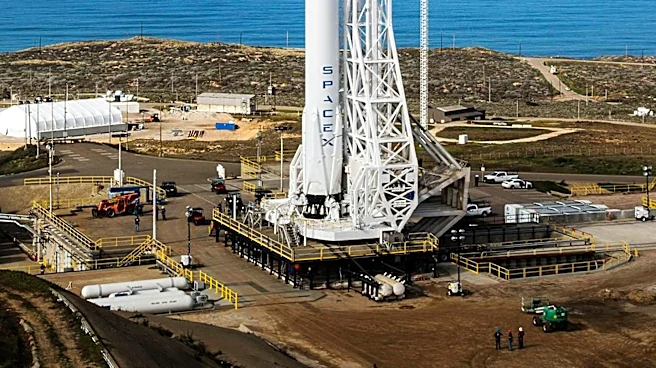
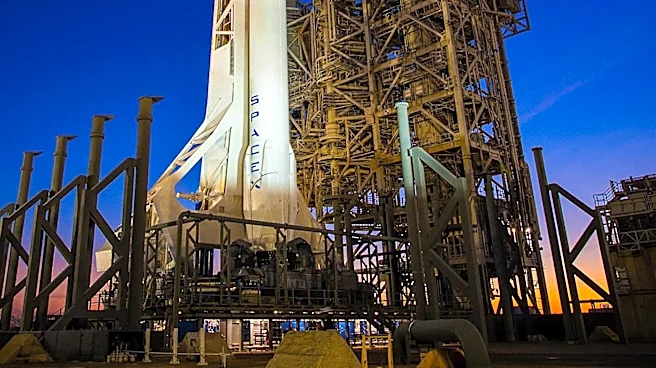
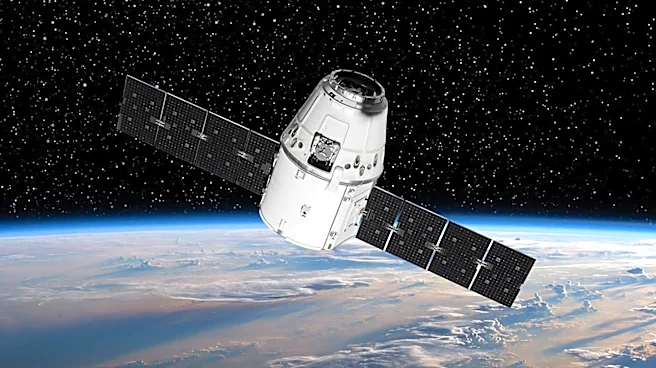
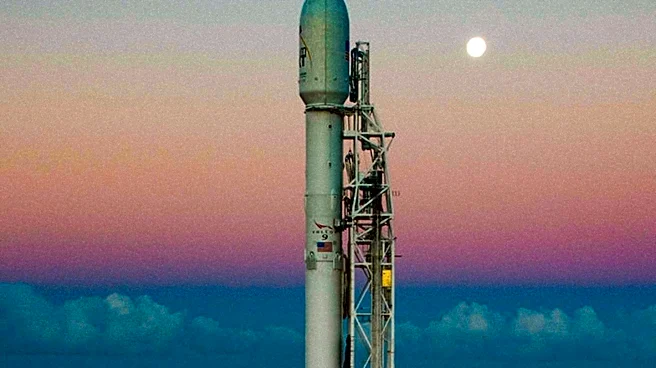
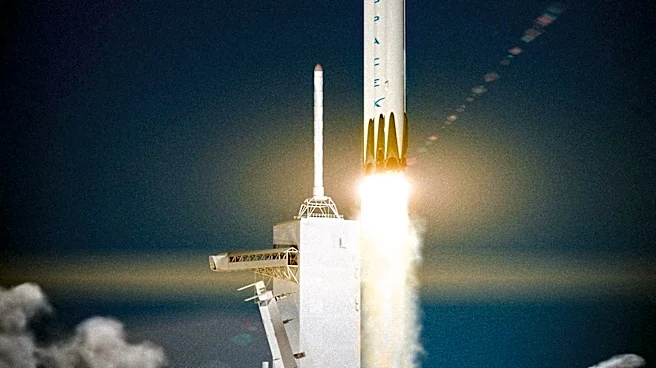
SpaceX has launched a mission robotic vehicle (MRV) developed by Northrop Grumman to extend the operational life of aging satellites. The MRV, equipped with jetpacks, will spend the next year positioning itself in geosynchronous orbit, 22,300 miles above
Earth. This orbit allows satellites to match Earth's rotation, providing continuous coverage over the same area. The MRV will attach jetpacks to satellites running low on fuel, enabling them to continue functioning for several more years. This mission is part of a broader effort to maintain satellite operations and reduce costs associated with launching new satellites. The MRV's debut flight included three electric-propelled jetpacks, which will be attached to satellites from SES of Luxembourg and Optus of Australia.
Why It's Important?
The mission represents a significant advancement in satellite servicing technology, offering a cost-effective solution for extending the life of satellites. By attaching jetpacks to satellites, operators can avoid the high costs of launching replacements, potentially saving millions of dollars. This technology also supports sustainability in space by reducing the need for new satellite launches and managing space debris. The collaboration between Northrop Grumman, the U.S. Naval Research Laboratory, and the Defense Advanced Research Projects Agency highlights the strategic importance of maintaining satellite infrastructure for communication and defense purposes.
What's Next?
The MRV will continue its mission over the next year, aiming to attach jetpacks to additional satellites. Northrop Grumman plans to enhance its robotic technology for future missions, potentially including satellite repairs and the removal of defunct satellites from orbit. The success of this mission could lead to increased investment in satellite servicing technologies and further collaborations with government agencies. Additionally, Katalyst Space Technologies is testing its Link satellite helper to assist NASA's Swift Observatory, which could extend the observatory's operational life.