

What's Happening?
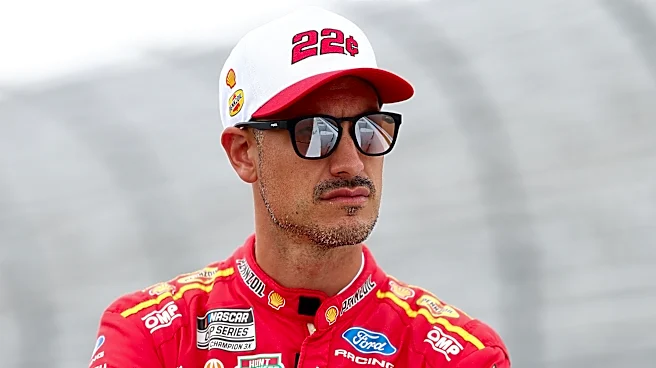
NASCAR driver Ryan Blaney experienced a significant setback during the NASCAR Cup Series Enjoy Illinois 300 at Gateway. While running in sixth place on lap 155, Blaney's vehicle suffered a brake rotor failure, causing him to hit the wall. This incident
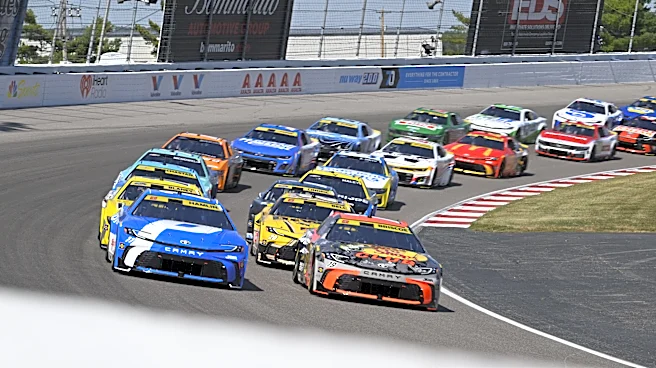
led to a 35th-place finish in the race. The brake issue was not isolated to Blaney, as Chase Elliott also encountered a similar problem, which subsequently involved Chase Briscoe on lap 214. The race was notably chaotic, marked by a total of 18 cautions, indicating widespread challenges for many competitors. This poor performance at Gateway resulted in Blaney dropping from third to fourth in the overall standings. The prevalence of brake issues suggests a potential underlying problem with equipment or track conditions that affected multiple teams.
Why It's Important?
This incident is important for several reasons within the NASCAR Cup Series. For Ryan Blaney, a top contender, the brake failure and subsequent low finish represent a significant blow to his championship aspirations, causing him to lose ground in the standings. Such mechanical failures can shift the competitive landscape, potentially benefiting other drivers who maintain consistent performance. More broadly, the occurrence of multiple brake issues among different drivers, including other prominent figures like Chase Elliott, raises concerns about vehicle safety and component reliability across the series. This could prompt NASCAR officials and teams to investigate the root causes of these failures, potentially leading to adjustments in vehicle specifications, maintenance protocols, or even track assessments to ensure fair and safe competition. The high number of cautions also impacts the race's flow and fan experience, highlighting the need for reliable equipment.
What's Next?
Following the brake failure at Gateway, Ryan Blaney and his team will likely focus on a thorough investigation into the cause of the mechanical issue to prevent future occurrences. Their immediate goal will be to rebound in upcoming races to regain lost ground in the standings. Blaney has a strong track record at Bristol Motor Speedway, having led 190 laps and finishing second in a previous race there in April. This history suggests Bristol could be a crucial opportunity for him to recover and demonstrate his competitive form. The broader NASCAR community may also see discussions or actions regarding vehicle component reliability, especially concerning brake systems, given the multiple incidents at Gateway. Teams will be scrutinizing their equipment more closely, and NASCAR might issue directives or recommendations to enhance safety and performance consistency across the series.
Beyond the Headlines
The recurring issue of brake failures, as seen with Ryan Blaney and other drivers at Gateway, points to a deeper challenge in high-performance racing: the delicate balance between pushing technological limits for speed and ensuring component durability and safety. While racing inherently involves risks, a pattern of mechanical failures can undermine driver confidence and raise questions about the integrity of the competition. This situation could lead to a re-evaluation of material science in brake component manufacturing or even a review of track-specific demands that might be overstressing current designs. The incident also highlights the intense pressure on engineering teams in NASCAR to constantly innovate while maintaining stringent safety standards. The long-term implications could include new regulations on parts, increased scrutiny during pre-race inspections, or even collaborative efforts among teams and manufacturers to share data and best practices to enhance overall vehicle reliability and driver safety.