




What's Happening?
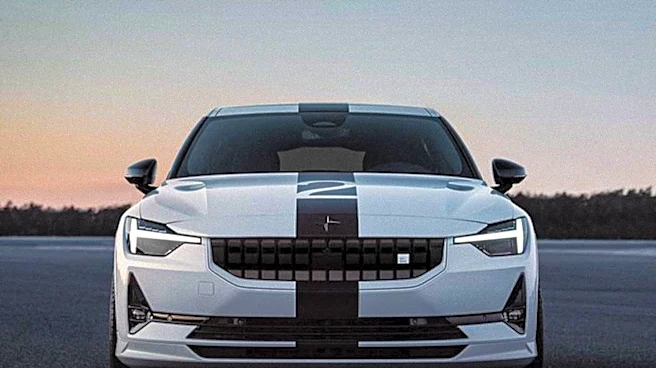
The used electric vehicle (EV) market is seeing significant depreciation, making models like the Polestar 2 an increasingly attractive option for buyers. Originally launched in 2020 with a starting price near $60,000, pre-owned Polestar 2s are now available
in the United States for under $20,000, with some examples, such as a 60,000-mile, 469hp Long Range Dual Motor model, selling for as low as $14,200. This depreciation is attributed to the general trend of used EVs losing value quickly, combined with Polestar's current market position. The Polestar 2, built on the CMA platform shared with Volvo XC40 and C40, offers various configurations, including single and dual motor options with battery packs providing an EPA estimated range of 247 to 320 miles. Despite the brand's evolving presence in the U.S., the vehicle's robust battery health and shared components with Volvo make it a viable option for budget-conscious EV buyers.
Why It's Important?
The substantial depreciation of used EVs like the Polestar 2 has significant implications for both consumers and the broader automotive market in the U.S. For consumers, it presents an opportunity to acquire advanced electric vehicle technology at a fraction of its original cost, potentially accelerating EV adoption among those previously deterred by high new car prices. This trend could also influence the resale values of other EV models, pushing down prices across the used EV market. For the automotive industry, it highlights the challenges of maintaining value in a rapidly evolving technological landscape and the need for manufacturers to consider long-term depreciation in their pricing strategies. The availability of affordable used EVs could also impact the demand for new, less expensive EV models, as consumers weigh the cost-benefit of buying new versus pre-owned electric vehicles.
What's Next?
The market for used Polestar 2s and other depreciated EVs is likely to continue offering compelling value propositions. Potential buyers should research the specific configurations and maintenance history, as certain early models (2021-2023 FWD Single Motor) have reported issues with front motors. Common issues like the 'Wheel of Fortune' noise from rear axles under regenerative braking are known, but often have readily available fixes due to shared parts with Volvo. Servicing remains a consideration, though Polestar has committed to maintaining its network of 32 service centers in the U.S. for existing owners and warranty work. Independent Volvo mechanics are also increasingly capable of servicing Polestars. Buyers should also factor in higher EV insurance rates and potentially faster tire wear compared to ICE vehicles, though charging costs can be significantly lower.
Beyond the Headlines
The rapid depreciation of certain EV models like the Polestar 2 brings to light the complex economics of electric vehicle ownership. While new EVs often come with a premium, the used market is demonstrating that the initial investment can be significantly offset by depreciation, making them more accessible. This phenomenon challenges the traditional perception of vehicle value retention and underscores the unique characteristics of EV technology, particularly battery health and software updates. The ability to download performance upgrades and the commonality of parts with established brands like Volvo contribute to the Polestar 2's long-term viability, even as the brand's market presence shifts. This situation also prompts a re-evaluation of what constitutes 'value' in a vehicle, moving beyond just the purchase price to include operational costs, maintenance, and technological longevity in a rapidly advancing sector.