




What's Happening?
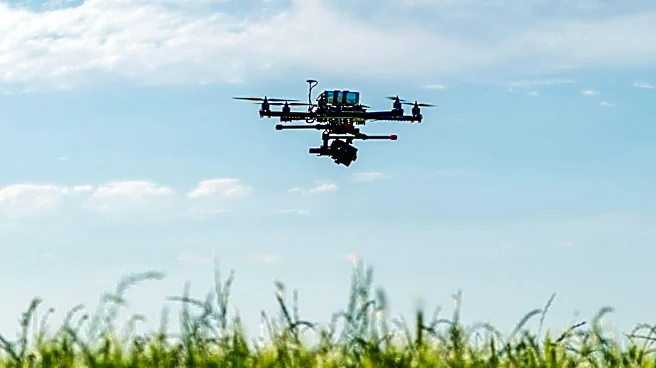
An underwater drone, the ARV-i, developed by Boxfish Research and Transmark Subsea, has become fully autonomous in Norwegian fish farms due to sunlight interference with its light-based steering system. The ARV-i uses machine-vision cameras and acoustic
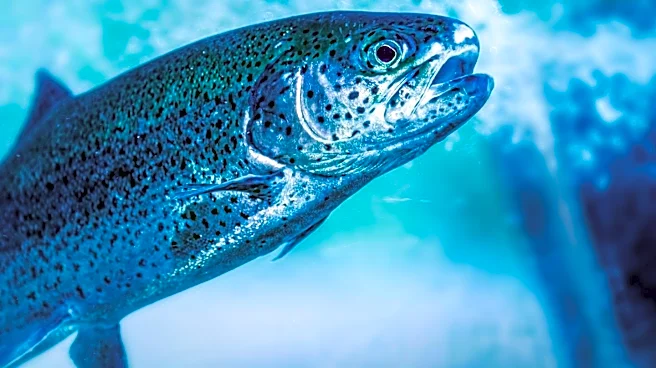
sensors to navigate and can operate underwater for up to 12 months. It inspects salmon farms, measures fish size and health, and transmits data to farm managers. The drone's autonomy allows it to independently perform tasks without human intervention, enhancing efficiency in monitoring fish health and growth.
Why It's Important?
The ARV-i's autonomous capabilities represent a significant advancement in aquaculture technology, potentially transforming fish farming operations. By providing continuous monitoring and data collection, the drone helps optimize fish health and growth, leading to more efficient and sustainable farming practices. This technology could reduce the need for human divers, lowering operational risks and costs. The development also highlights the growing role of robotics and AI in agriculture, offering insights into future applications in other sectors.
What's Next?
The success of the ARV-i in Norwegian waters may lead to its adoption in other regions and aquaculture industries. As the technology proves its reliability and cost-effectiveness, more fish farms might integrate autonomous drones into their operations. This could prompt further innovations in underwater robotics, potentially expanding their use beyond aquaculture to other marine industries. Stakeholders, including environmental groups and regulatory bodies, may also engage in discussions about the implications of increased automation in marine environments.