








What's Happening?
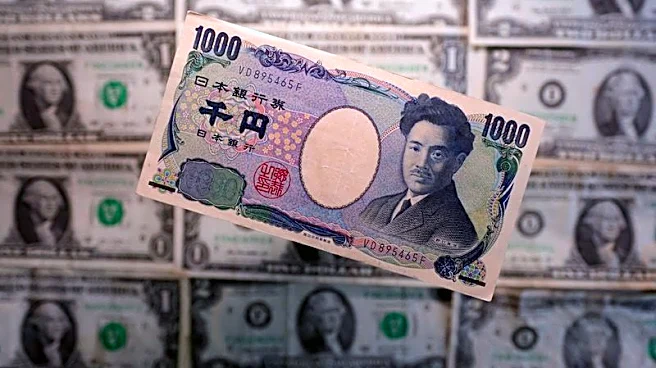
The US Treasury has joined forces with Japan in a coordinated effort to stabilize the Japanese yen, which has been under significant pressure. This intervention comes after Japan's solo attempts to manage the yen's value proved insufficient. The USD/JPY
currency pair has seen a decline, reaching its lowest levels since May, as the intervention takes effect. The move is seen as symbolic, indicating the US's support for Japan, but also highlights the challenges Japan faces in managing its currency independently. The intervention suggests that the US acknowledges the yen's undervaluation and the potential overvaluation of the US dollar.
Why It's Important?
This joint intervention is significant as it underscores the complexities of global currency markets and the interconnectedness of national economies. For Japan, stabilizing the yen is crucial to maintaining economic stability and preventing further economic strain. For the US, participating in this intervention reflects a strategic decision to support an ally while managing the implications of a strong dollar. The move could have broader implications for US monetary policy, especially as it navigates its own economic challenges. The intervention also sends a political message, potentially complicating US economic policy ahead of upcoming elections.
What's Next?
The future of this intervention remains uncertain. While it may provide short-term relief, the underlying economic fundamentals need to change for long-term stability. Japan will likely continue to face pressure to manage its currency, and the US will need to balance its support with domestic economic priorities. The intervention could lead to further discussions on international currency policies and the role of major economies in stabilizing global markets. Stakeholders will be closely watching for any shifts in US monetary policy and the potential impact on global economic dynamics.