





What's Happening?
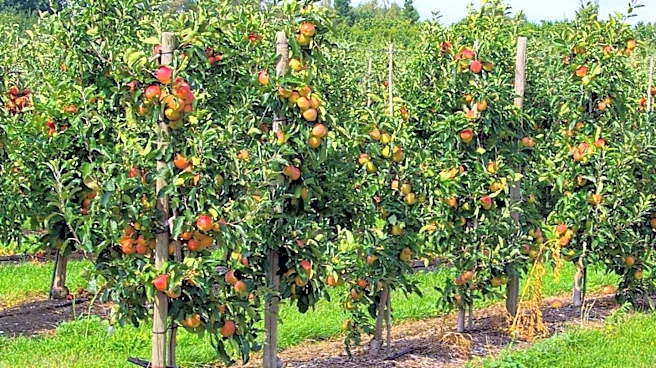
Two major fruit growers in Washington, Sundquist Fruit and Gilbert Orchards, have notified the state of 761 job separations scheduled for November. Sundquist Fruit will cut 243 workers on November 15, and Gilbert Orchards will separate 518 workers on November 22.
These dates align precisely with the expiration of their federal guest worker (H-2A) contracts. The companies filed these notices under Washington's Worker Adjustment and Retraining Notification (WARN) requirements, which mandate 60 days' notice for cutting 50 or more employees. The separations are classified as 'layoffs' because no recall date for the following season has been set, a common practice in seasonal agriculture due to uncertainties in weather, crop volume, and federal policy.
Why It's Important?
This announcement highlights the significant impact of federal guest worker programs and state labor laws on the agricultural sector in Washington. The H-2A program is crucial for growers to secure labor for seasonal harvests, and its expiration directly leads to these job separations. The state's expanded WARN Act, effective July 27, 2025, now requires growers to issue layoff notices for routine seasonal reductions, which previously were not reported. This change creates a perception of mass layoffs, even though these are predictable ends to seasonal contracts. The situation also underscores the financial pressures on Washington farms, which have faced rising costs, taxes, and labor shortages, making the state one of the most expensive places to grow food.
What's Next?
The 761 workers will be separated in November as their H-2A contracts conclude. While these are seasonal reductions, the classification as 'layoffs' under the new state law means these workers will be formally separated without a set recall date. Growers will likely continue to navigate the complexities of the H-2A program and state labor regulations for future seasons. The agricultural industry in Washington will continue to advocate for policies that address the rising costs of farming and labor. The state's Employment Security Department will process these notifications, and the broader economic impact on Yakima, Franklin, and Grant counties will be observed as these seasonal jobs conclude.
Beyond the Headlines
The situation with Washington's fruit growers reveals a deeper tension between agricultural labor needs, federal immigration policies, and state-level worker protection laws. The H-2A program, while providing essential labor, is subject to annual contract cycles that create predictable but formally designated 'layoffs.' The stricter state WARN Act, intended to protect workers, inadvertently creates a public perception of economic distress even in routine seasonal transitions. This dynamic can lead to misunderstandings about the health of the agricultural sector and potentially influence public opinion and policy debates around labor, immigration, and agricultural subsidies. The long-term viability of farming in Washington depends on finding a sustainable balance between labor costs, regulatory burdens, and market prices.