


What's Happening?
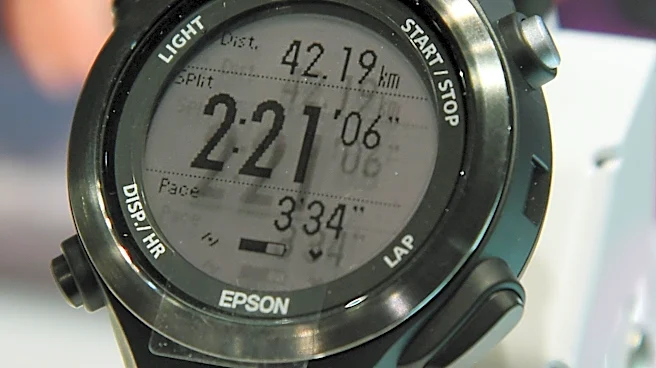
Running watches are increasingly becoming essential tools for athletes engaged in interval training, offering advanced features that streamline workouts and track progress. These devices provide clear prompts for work and recovery intervals directly from
the wrist, eliminating the need for phone timers and allowing runners to maintain focus on their pace. Key functionalities include sequential interval timers, customizable interval durations, and automatic repetition cycles. Many models also integrate GPS to record routes, distance, and pace, alongside displaying heart rate and workout summaries. Brands like Timex, Casio, EZON, CakCity, Beeasy, and Hearkent offer a range of watches with varying capabilities, from basic stopwatch functions to sophisticated lap memory and multi-display layouts. The selection of a watch depends on individual training needs, such as the desire for detailed lap records, GPS tracking, or simple, app-free activity monitoring.
Why It's Important?
The evolution of running watches significantly impacts U.S. athletes by optimizing interval training, a critical component for improving speed, endurance, and overall fitness. By providing precise timing and real-time data, these watches enable runners to execute structured workouts more effectively, leading to measurable improvements in performance. The ability to track pace, distance, and heart rate directly on the wrist allows for immediate adjustments and better adherence to training plans. This technology democratizes access to sophisticated training methods, previously requiring more complex setups or coaching. For competitive runners, detailed lap records and workout summaries offer invaluable insights for performance analysis and strategic planning. For recreational runners, the ease of use and clear prompts can make interval training less intimidating and more enjoyable, fostering greater consistency in their fitness routines.
What's Next?
The market for running watches is expected to continue its growth and innovation, with future developments likely focusing on enhanced sensor accuracy, longer battery life, and more intuitive user interfaces. Integration with advanced analytics platforms and personalized coaching algorithms could become standard, offering runners even more tailored feedback and training recommendations. As technology progresses, watches may incorporate more biometric data, such as blood oxygen levels or hydration status, to provide a holistic view of an athlete's physiological state. The trend towards app-free functionality for basic tracking, as seen with some models, might also expand, catering to users who prefer simplicity and privacy. Competition among manufacturers will likely drive down costs while increasing feature sets, making advanced interval training tools accessible to an even wider audience of U.S. runners.
Beyond the Headlines
Beyond their immediate utility, advanced running watches contribute to a broader shift in how individuals approach personal fitness and data. These devices normalize the collection and analysis of personal performance metrics, encouraging a data-driven mindset in health and wellness. This can lead to a more informed and proactive approach to training, but also raises questions about data privacy and the potential for over-reliance on technology. The constant feedback loop provided by these watches can foster a sense of continuous self-improvement, but also potentially create pressure to always perform optimally. Culturally, the widespread adoption of these gadgets reinforces the value placed on efficiency and measurable progress in modern U.S. society, extending beyond the realm of professional sports into everyday fitness routines.