






What's Happening?
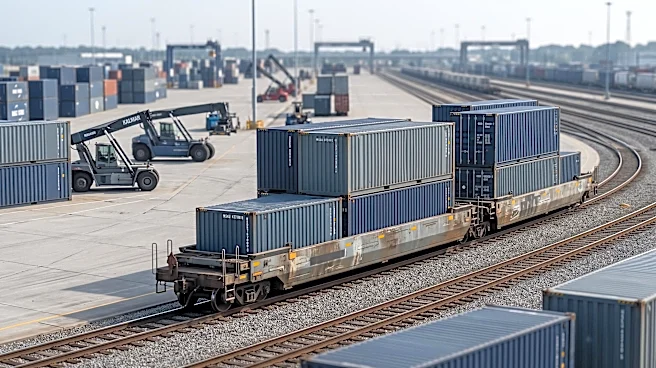
Georgia Governor Brian Kemp, alongside the Georgia Ports Authority (GPA), officially opened the $134 million Gainesville Inland Port on October 29, 2026. The new facility aims to provide enhanced supply chain options for over 330 manufacturers in Northeast
Georgia, a region experiencing significant growth in manufacturing and logistics. The inland port connects this area directly to the Port of Savannah via Norfolk Southern rail service, offering businesses more affordable and efficient transportation for goods. According to Governor Kemp, this initiative will make it easier for Georgia businesses to access global markets and is expected to alleviate congestion on state highways by shifting 26,000 containers to rail in its first year. The port has an annual capacity of 200,000 containers and provides convenient truck access to Interstates 85 and 985, along with extended gate hours and on-terminal storage options to improve inventory flexibility for customers. The GPA also invested $4.8 million in local road projects in Hall County to improve traffic flow and safety around the new facility.
Why It's Important?
The Gainesville Inland Port is a critical infrastructure development for Georgia, significantly bolstering the state's logistics network and economic competitiveness. By bringing the Port of Savannah's capabilities closer to Northeast Georgia, the project directly supports the region's robust manufacturing sector, which accounts for 33% of its workforce. This improved connectivity is expected to attract further investment and job creation, building on the $2 billion in capital investment and over 4,800 jobs added to Gainesville-Hall County since 2020. The shift from truck to rail transportation for a substantial volume of containers will not only reduce operational costs for businesses but also contribute to environmental benefits through lower emissions and decreased traffic on major highways. This strategic investment by the Georgia Ports Authority, part of its $5 billion ten-year expansion plan, reinforces Georgia's position as a leading state for business and logistics, offering companies more competitive supply chain solutions and global market access.
What's Next?
The Gainesville Inland Port is expected to rapidly integrate into Georgia's broader logistics network, with the Georgia Ports Authority anticipating a significant shift of container traffic to rail in its initial year of operation. This will likely lead to a measurable reduction in truck traffic on Atlanta and Georgia highways and improved efficiency for businesses in North Georgia and the Carolinas. The GPA's ongoing $5 billion, ten-year expansion plan, which includes adding five container berths at the Port of Savannah and a new RoRo berth at the Port of Brunswick, indicates a continued focus on enhancing port infrastructure and capacity. Future developments include the planned construction of the $2.3 billion Savannah Container Terminal in 2028, which will further expand the Port of Savannah's capacity to 12 million TEUs by the mid-2030s. These expansions are designed to meet the long-term growth needs of customers and maintain Georgia's competitive edge in global trade.
Beyond the Headlines
The opening of the Gainesville Inland Port represents more than just a logistical upgrade; it signifies a strategic regional development approach that integrates economic growth with environmental considerations. By promoting rail transport, the project addresses concerns about carbon emissions and highway congestion, aligning with broader sustainability goals. The investment in local road infrastructure also highlights a commitment to community integration, ensuring that economic development benefits local residents through improved safety and traffic management. This model of inland port development could serve as a blueprint for other states looking to decentralize port operations, enhance supply chain resilience, and foster economic growth in inland regions. It underscores a long-term vision for infrastructure that supports both industrial expansion and quality of life, positioning Georgia as a leader in innovative logistics solutions.