





What's Happening?
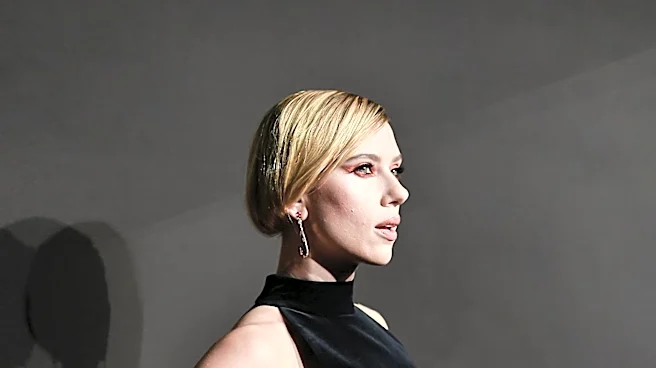
Scarlett Johansson, a prominent Hollywood actress, grew up in a low-income household in New York City, where her family relied on welfare and food stamps. Despite these early struggles and her parents' divorce when she was 13, Johansson pursued acting
from a young age. Her career gained significant traction with roles in films like 'Girl with a Pearl Earring,' which established her as a promising young talent. However, as she transitioned into adult roles, Johansson felt increasingly typecast as a 'bombshell-type of actor,' often playing the 'other woman' or an 'object of desire.' This limited perception led to frustration, particularly after initial rejections for roles in 'Iron Man 2' and 'Gravity.' Her breakthrough as Natasha Romanoff/Black Widow in the Marvel Cinematic Universe marked a turning point, allowing her to break free from previous typecasting. Johansson has since earned two Academy Award nominations and has been named Esquire's Sexiest Woman Alive twice. Forbes estimated her earnings at approximately $43 million in 2025, largely from projects like 'Jurassic World Rebirth,' contributing to an estimated net worth of $165 million.
Why It's Important?
Scarlett Johansson's career trajectory highlights significant challenges within the entertainment industry, particularly concerning the typecasting of female actors. Her experience underscores how early success can inadvertently pigeonhole performers into specific roles based on appearance, potentially limiting their artistic range and long-term career development. This issue affects not only individual actors but also broader industry perceptions of talent and diversity in roles. Johansson's eventual success in breaking free from these constraints, particularly through her role as Black Widow, demonstrates the potential for actors to redefine their public image and expand their professional opportunities. Her story also sheds light on the economic disparities that can exist even among successful individuals in Hollywood, as she actively supports charitable causes related to hunger, drawing from her own childhood experiences with food insecurity. This personal connection to philanthropy adds a layer of authenticity to her advocacy, emphasizing the importance of giving back.
What's Next?
As Scarlett Johansson continues her career, future roles will likely reflect her ongoing efforts to diversify her acting portfolio and challenge industry norms. Her past experiences with typecasting suggest a continued focus on selecting roles that offer complex characters and artistic depth, moving beyond superficial portrayals. Given her significant earnings and influence, Johansson may also leverage her platform to advocate for greater equity and representation within Hollywood, potentially inspiring other actors facing similar challenges. Her involvement in major franchises like 'Jurassic World Rebirth' indicates a sustained presence in high-profile productions, while her personal commitment to charitable causes, particularly those addressing food insecurity, suggests continued philanthropic engagement. Future projects could also see her exploring directorial or production roles, further expanding her impact on the industry and allowing her to shape narratives from behind the camera.
Beyond the Headlines
Scarlett Johansson's narrative extends beyond typical celebrity success, touching upon deeper societal and ethical considerations within the entertainment industry. Her early life on welfare and food stamps provides a stark contrast to her current status as one of the highest-paid actors, illustrating the vast economic disparities that can exist within American society and the potential for upward mobility, albeit often through extraordinary talent and perseverance. Her struggle against being typecast as a 'bombshell' raises critical questions about the objectification of women in media and the pressures placed on female performers to conform to certain physical ideals. This ongoing battle reflects broader cultural conversations about gender roles, body image, and the need for more diverse and authentic representation in film. Furthermore, her personal connection to food insecurity and subsequent philanthropic efforts highlight the ethical responsibility of public figures to address social issues, using their influence to bring attention to and support causes that resonate with their own experiences.