





What's Happening?
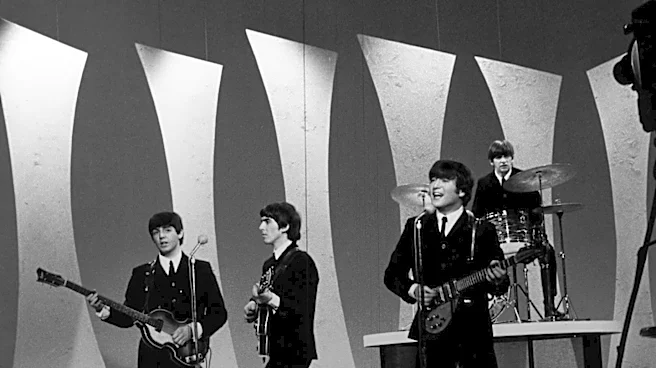
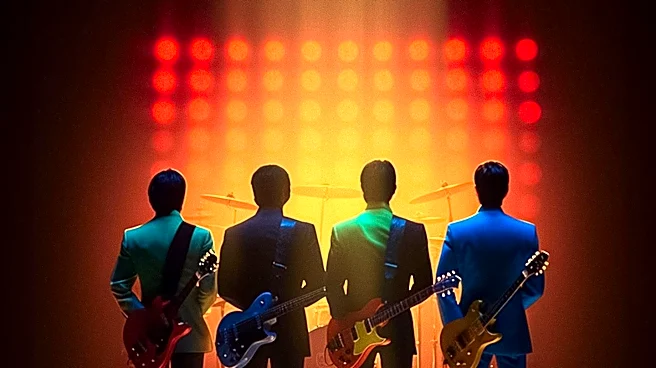
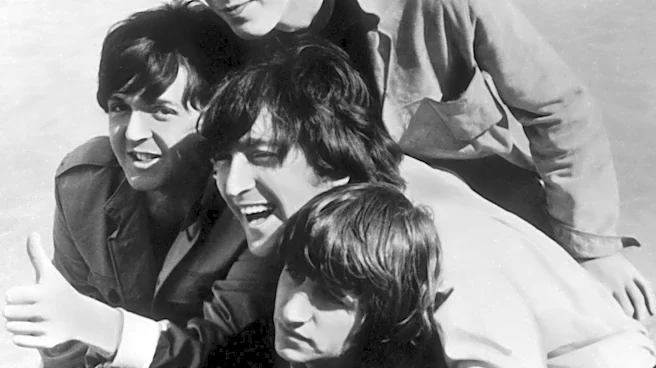
Actors Harris Dickinson, Joseph Quinn, and Barry Keoghan were recently seen filming scenes in London, recreating the iconic opening sequence of The Beatles' 1964 film 'A Hard Day's Night'. The trio, portraying John Lennon, George Harrison, and Ringo Starr
respectively, were filmed being chased by fans through the streets near Marylebone Station. This production is part of a series of highly anticipated Beatles biopics. The actors were captured smiling, dancing, and running, accompanied by dozens of extras dressed in convincing 1960s attire, to accurately depict the era. Paul Mescal, who is cast as Paul McCartney, was not present during this specific filming sequence. The project is backed by Sony Pictures and has the full support of the Beatles' estates, indicating a significant and authorized cinematic endeavor.
Why It's Important?
The recreation of such a memorable scene from 'A Hard Day's Night' highlights the ambitious scope of the upcoming Beatles biopics. This project is significant for several reasons, particularly for the entertainment industry and the enduring legacy of The Beatles. By meticulously recreating iconic moments, the filmmakers aim to capture the essence and energy of the band's early career, which could resonate deeply with both long-time fans and new audiences. The involvement of Sony Pictures and the support of the Beatles' estates lend considerable weight and authenticity to the production, suggesting a high-quality and definitive portrayal of the band's story. This could lead to a renewed interest in The Beatles' music and cultural impact, potentially boosting music sales, streaming numbers, and merchandise, thereby benefiting the music and film industries. The casting of prominent young actors also ensures a fresh perspective while maintaining a connection to the band's historical significance.
What's Next?
Filming for the Beatles biopics is ongoing, with previous reports indicating production in Liverpool and London, transforming various locations to resemble 1960s settings. The next steps will likely involve continued principal photography, potentially covering other pivotal moments in The Beatles' career, such as their rise to global fame, their studio innovations, and their eventual disbandment. Post-production will follow, involving editing, sound design, and visual effects to bring the 1960s era to life. Given the backing of Sony Pictures and the estates, a significant marketing and distribution campaign is expected leading up to the release. Audiences can anticipate further announcements regarding release dates, trailers, and additional cast details as the production progresses. The success of these biopics could also pave the way for similar projects focusing on other iconic musical figures or historical periods.
Beyond the Headlines
The decision to produce a series of biopics, rather than a single film, suggests a comprehensive exploration of The Beatles' story, allowing for a deeper dive into their individual and collective journeys. This approach could offer nuanced perspectives on their creative processes, personal struggles, and the cultural shifts they influenced. The meticulous recreation of scenes like the 'A Hard Day's Night' opening underscores a commitment to historical accuracy and authenticity, which is crucial for a band with such a well-documented history. Furthermore, the project's ability to secure the support of the Beatles' estates is a testament to its potential to honor their legacy respectfully. This could set a new standard for biographical films about cultural icons, emphasizing collaboration with the subjects' families or estates to ensure a faithful and impactful narrative. The biopics also have the potential to introduce The Beatles' music and story to a new generation, ensuring their continued relevance in contemporary culture.