


What's Happening?
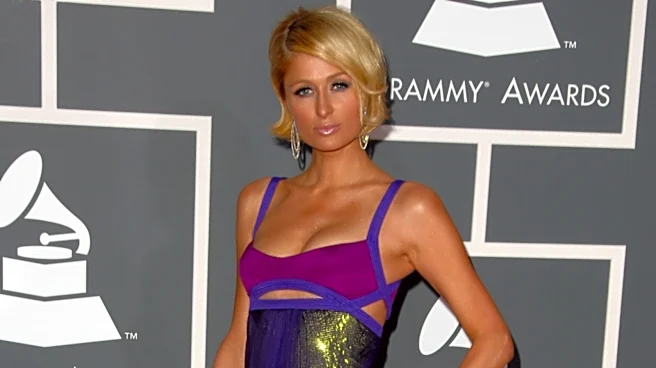
Margot Robbie was recently photographed in Paris wearing an outfit that has drawn comparisons to the iconic style of Samantha Jones from 'Sex and the City'. Her ensemble included a corset top, a low-slung skirt, strappy Jude heels, and an Alaïa Le Teckel
bag. This fashion choice marks a departure from Robbie's more casual 'out-out' wardrobe, which has often featured jeans even at high-profile events like red carpets and Met Gala after-parties. The specific look, combined with a 'Samantha Jones bob' hairstyle, has led to observations about its resemblance to the character's bold and distinctive fashion sense. The comparison highlights the enduring influence of 'Sex and the City's' costume design, particularly the work of Patricia Field, who was specifically requested by Kim Cattrall for her cameo in 'And Just Like That…' to ensure her character's look remained authentic.
Why It's Important?
This event is important as it underscores the significant cultural impact of television fashion and character styling on contemporary celebrity trends. The immediate comparison of Margot Robbie's outfit to Samantha Jones's style demonstrates how fictional characters can become enduring fashion icons, influencing real-world sartorial choices and public perception. For the fashion industry, it highlights the power of nostalgia and the cyclical nature of trends, where past styles are reinterpreted by current celebrities, generating renewed interest in specific designers or aesthetics. This also impacts celebrity branding, as Robbie's choice to emulate a character known for her confidence and daring fashion could subtly shape her public image. Furthermore, it reinforces the value of costume designers like Patricia Field, whose work continues to resonate and inspire years after its initial debut, proving that well-crafted character wardrobes can transcend their original context and become cultural touchstones.
What's Next?
Following this high-profile fashion moment, it is likely that there will be increased media attention on Margot Robbie's future public appearances, with fashion commentators and fans scrutinizing her outfits for further stylistic influences or departures. This could lead to a trend of other celebrities drawing inspiration from iconic television characters, potentially sparking a broader fashion movement rooted in pop culture nostalgia. Designers and brands associated with the specific items Robbie wore, such as Alaïa, may experience a surge in interest or sales, as celebrity endorsements often translate into consumer demand. Additionally, discussions around the lasting legacy of 'Sex and the City' and its impact on fashion are expected to continue, potentially leading to retrospectives or renewed appreciation for the show's costume design. This event might also encourage more celebrities to experiment with bolder, character-inspired looks, moving away from more conventional red-carpet attire.
Beyond the Headlines
Beyond the immediate fashion commentary, this incident touches upon deeper cultural phenomena, particularly the blurring lines between fictional personas and celebrity identities. When a celebrity like Margot Robbie consciously or unconsciously channels a character like Samantha Jones, it reflects a broader societal fascination with aspirational figures and the desire to embody certain traits associated with them, such as confidence, independence, and daring. This also highlights the role of social media and instant photography in disseminating and interpreting celebrity fashion, allowing for rapid comparisons and trend-setting. Ethically, it raises questions about originality versus homage in fashion, and how much credit is given to the original creators of iconic styles. Culturally, it reinforces the idea that fashion is not merely clothing but a powerful form of communication, capable of conveying personality, status, and cultural references, and that television continues to be a potent source of inspiration for real-world style.