






What's Happening?
Struggling small towns across the United States are actively courting artificial intelligence (AI) data centers as a means of economic survival, contrasting with larger, more affluent areas that are tightening restrictions on such developments. Major
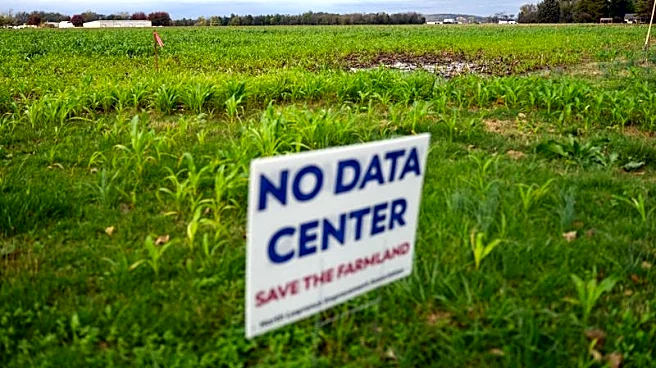
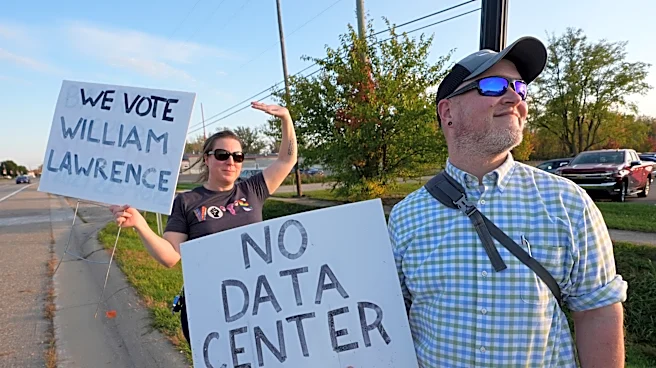
U.S. cities are increasingly concerned about the heavy power consumption, noise, and environmental impact of data centers, leading to stricter regulations. Conversely, rural towns, many of which have experienced industrial collapse and population decline, view data centers as a crucial source of tax revenue to maintain essential services like schools and roads. For example, Harwood, North Dakota, with a population of 845, recently voted against a measure that would have imposed additional rules on large industrial projects, with 75.6% of voters rejecting the ballot measure. This decision was driven by the expectation that a new data center would significantly increase the city's property tax revenue, potentially six times the 2024 level. Similarly, Ellendale, North Dakota, and Quincy, Washington, have seen substantial economic benefits and infrastructure improvements from attracting data centers.
Why It's Important?
The trend of small towns embracing data centers highlights a significant economic and social divergence within the U.S. It underscores the desperation of rural communities facing economic hardship and the innovative, albeit sometimes controversial, strategies they are employing for revitalization. For these towns, data centers represent not just jobs and tax revenue, but a lifeline that can prevent further decline and fund critical public services. This shift also reveals a growing tension between economic development and environmental concerns, particularly regarding energy consumption and noise, which are driving data centers away from more populated areas. The influx of data centers can transform local economies, as seen in Quincy, Washington, where the city's annual revenue jumped from $6 million in 2006 to $47 million in 2024, leading to new hospitals, schools, and fire stations. However, this also brings challenges, such as rising housing costs and internal community rifts, as new construction workers and higher incomes can price out long-term low-income residents.
What's Next?
The pattern of data center development is likely to continue favoring rural and economically struggling areas as urban centers maintain or increase restrictions. This will likely lead to further economic disparities between regions, with some small towns experiencing rapid growth and others continuing to decline. Communities considering data center projects will need to carefully weigh the economic benefits against potential social and environmental costs, including increased demand for housing, potential displacement of residents due to rising rents, and environmental impacts. The ongoing debate over AI's societal impact, with 57% of respondents in a network exit poll believing AI will do more harm than good, could also influence future policy decisions regarding data center development. The success stories in places like Harwood and Ellendale may encourage other struggling towns to pursue similar strategies, while the challenges faced in places like Port Washington, Wisconsin, where a $15 billion data center is planned, will serve as cautionary tales.
Beyond the Headlines
The migration of data centers to small towns raises deeper questions about equitable development and the future of rural America. While these facilities offer a much-needed economic boost, they also introduce complex social dynamics. The rapid influx of wealth and new residents can disrupt existing community structures, leading to gentrification and the erosion of local culture. The environmental footprint of these energy-intensive operations, even if welcomed by local governments, remains a long-term concern for the broader climate agenda. Furthermore, the reliance on a single industry, such as data centers, for economic stability could create new vulnerabilities for these towns if the tech landscape shifts. This trend highlights the ethical dilemma of balancing immediate economic relief with long-term sustainability and social equity, forcing communities to confront difficult choices about their identity and future in an increasingly digital world.