





What's Happening?
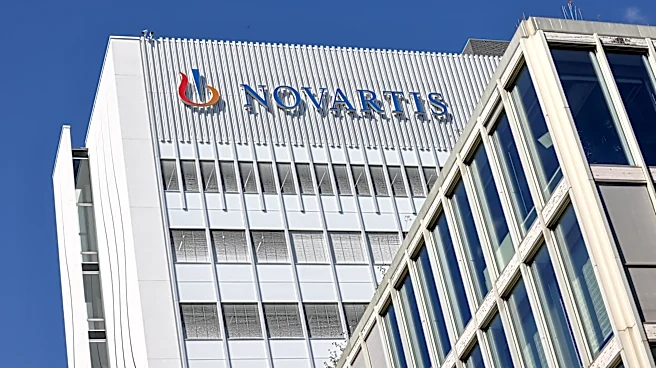
Vas Narasimhan, CEO of Novartis and an Anthropic board member, has offered a more conservative outlook on the impact of Artificial Intelligence (AI) on drug development compared to some other tech and science leaders. While figures like Anthropic CEO Dario
Amodei and Nobel laureate Demis Hassabis have suggested AI could cure major diseases within a decade, Narasimhan believes AI's role will be more incremental. He forecasts that AI will reduce the average drug development timeline from 12 years to eight within the next decade. This reduction includes shaving up to two years off the early phase before human trials. Narasimhan attributes the continued need for lengthy animal and human trials to a limited understanding of human biology. He also anticipates that AI will help increase success rates in clinical development from 8 percent to 12 percent, positioning AI's benefit as a middle ground between overly ambitious predictions and industry skepticism.
Why It's Important?
This perspective from a major pharmaceutical CEO like Vas Narasimhan is crucial for managing expectations within the healthcare and technology sectors regarding AI's immediate capabilities. His more grounded forecast suggests that while AI will significantly optimize drug discovery and development processes, it will not be a panacea for all diseases in the near future. This realistic outlook can influence investment strategies, research priorities, and public perception, preventing potential disillusionment if overly optimistic predictions are not met. For pharmaceutical companies, even a four-year reduction in development time and a modest increase in success rates can translate into billions of dollars saved and more effective treatments reaching patients faster. This also highlights the ongoing importance of fundamental biological research and traditional clinical trials, even as AI tools become more sophisticated.
What's Next?
The pharmaceutical industry, including Novartis, is expected to continue integrating AI into various stages of drug development, focusing on areas where it can provide tangible benefits such as accelerating early-stage research and improving clinical trial success rates. Companies like Anthropic and Isomorphic, which are actively investing in AI-driven drug research and building biology labs, will likely continue their collaborations with pharmaceutical giants like Novartis. This collaboration aims to leverage AI's computational power to identify potential drug candidates and optimize experimental designs. The ongoing development of AI models and increased data availability will further refine these processes, potentially leading to more efficient drug pipelines and a higher probability of bringing new therapies to market. The industry will likely monitor the actual impact of AI on development timelines and success rates to adjust future strategies and investments.
Beyond the Headlines
Narasimhan's stance underscores a broader tension between the rapid advancements in AI technology and the complex, often unpredictable nature of biological systems. While AI excels at processing vast datasets and identifying patterns, the fundamental unknowns of human biology present a significant barrier to completely revolutionizing drug development overnight. This highlights the ethical and practical considerations of relying solely on AI without robust biological understanding and rigorous testing. The integration of AI in drug development also raises questions about data privacy, algorithmic bias in patient selection, and the regulatory frameworks needed to approve AI-designed therapies. Ultimately, the future of medicine will likely involve a synergistic approach, combining AI's analytical power with deep biological insights and human expertise to navigate the intricate path from discovery to patient care.