


What's Happening?
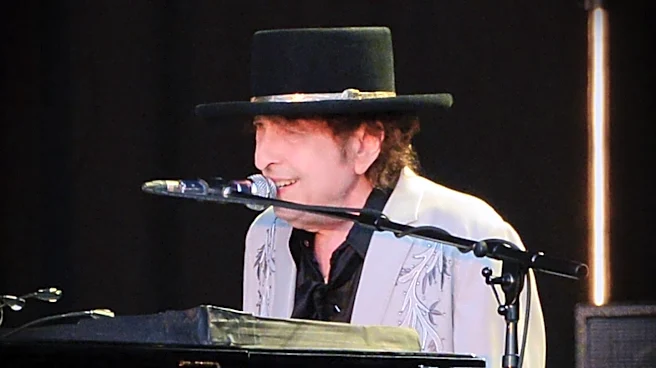
David Mansfield, a multi-instrumentalist who played with Bob Dylan during the 1976 Rolling Thunder Revue, recently shared his recollections of the tour. Mansfield, who was 19 at the time, described the tour as having a different vibe compared to the 1975
leg, largely influenced by Dylan's personal struggles, including his marriage falling apart. This personal turmoil, Mansfield noted, led to more intense and reinvented versions of Dylan's songs, such as a 15-minute 'Maggie's Farm' and radically altered lyrics for 'Lay Lady Lay.' Dylan also began playing electric guitar more prominently, which Mansfield described as 'rough' initially but eventually fitting the tour's abrasive ethos. The tour featured a large entourage, including guest musicians like Ringo Starr, and played in challenging venues such as the Astrodome, which presented significant sound issues. Mansfield also recalled specific moments, like Dennis Hopper reading Rudyard Kipling's 'If' in New Orleans and a chaotic show in Texas where the audience threw glass bottles.
Why It's Important?
Mansfield's insights offer a valuable historical perspective on a pivotal period in Bob Dylan's career and American music history. The Rolling Thunder Revue is renowned for its unique, carnival-like atmosphere and the raw energy of its performances. Understanding the internal dynamics, particularly Dylan's personal state and its impact on his artistic output, helps contextualize the music from this era. For music historians and fans, these firsthand accounts shed light on the creative process and the evolution of Dylan's live performances. The challenges faced by musicians on tour, such as difficult venues and the need to adapt to an artist's evolving musical interpretations, highlight the demanding nature of live music production. This period also saw the formation of new musical collaborations and the development of musicians like Mansfield, who went on to form The Alpha Band, showcasing the tour's broader influence on the music scene.
What's Next?
While the 1976 Rolling Thunder Revue is a historical event, Mansfield's ongoing interviews and reflections contribute to a continuous re-evaluation and appreciation of this period. The release of comprehensive box sets, such as the one Mansfield referenced, allows new generations of listeners to experience the music and context of the tour. Future discussions and analyses by music critics and historians will likely continue to draw upon these firsthand accounts to deepen understanding of Dylan's artistic journey. Mansfield himself continues to be involved in music, with upcoming projects including a new T Bone Burnett record and a Sam Shepard adaptation, indicating that his contributions to the music world extend beyond his past collaborations with Dylan. These ongoing projects ensure that the legacy of musicians from that era remains relevant and continues to evolve.
Beyond the Headlines
The interview with David Mansfield reveals deeper implications about the relationship between an artist's personal life and their creative output. Dylan's 'black cloud' during the 1976 tour, stemming from his marital issues, directly influenced the intensity and reinvention of his songs, demonstrating how personal turmoil can fuel artistic transformation. This highlights a recurring theme in art: suffering often leads to profound and impactful creations. Furthermore, Mansfield's description of the musicians' need to constantly adapt to Dylan's unpredictable changes in tempo, lyrics, and arrangements underscores the unique demands of working with a visionary artist. It speaks to the skill and intuition required to perform in such a dynamic environment, where traditional musical structures are often discarded. The tour also served as a crucible for emerging talent, fostering collaborations and new bands, illustrating how such large-scale artistic endeavors can act as incubators for future musical movements.