





What's Happening?
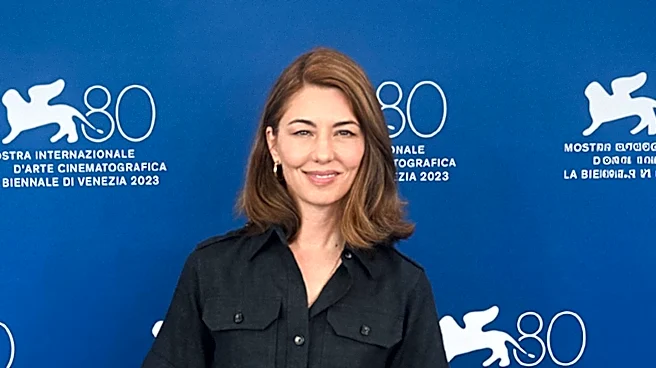
Academy Award-winning filmmaker Sofia Coppola views fear and nervousness as essential indicators that a project is worth pursuing. During an appearance on the 'Happy Hour with Ina Garten' podcast, Coppola stated that she has 'no idea' how a new movie
will fully materialize when she begins, but this uncertainty is part of what makes the work meaningful. She believes that if a project doesn't challenge her or evoke some level of fear, it's not worthwhile, echoing a sentiment shared by host Ina Garten. Coppola also revealed her practice of avoiding negative reviews, though she recently encountered old unfavorable critiques for her 2006 film 'Marie Antoinette,' which she now finds amusing given the film's enduring appeal and new audience. This approach highlights her dedication to her artistic vision despite initial anxieties and external judgments.
Why It's Important?
Coppola's perspective offers valuable insight into the creative process, particularly within the high-stakes film industry. Her embrace of fear as a motivational force can inspire other artists and professionals to push beyond their comfort zones, suggesting that true investment in a project often comes with inherent risks and self-doubt. This mindset challenges the conventional view that confidence is paramount, instead positing that a degree of insecurity can keep creators 'on their toes' and drive them to work harder, as noted by other public figures like Barbara Corcoran and Anna Kendrick. For the entertainment industry, this philosophy underscores the importance of artistic integrity and personal conviction over immediate critical reception, potentially encouraging more unique and challenging cinematic works that might initially face skepticism but ultimately find their audience.
What's Next?
Coppola will likely continue to apply this philosophy to her future projects, prioritizing personal investment and challenging narratives over guaranteed success or critical acclaim. Her ongoing commitment to projects that 'scare' her suggests that audiences can anticipate more distinctive and thought-provoking films from her. The renewed appreciation for 'Marie Antoinette' also indicates a potential for re-evaluation of her past works, possibly leading to increased interest in her filmography. This could influence other filmmakers to trust their instincts and pursue unconventional stories, fostering a more diverse and artistically driven landscape within the film industry. Her continued presence in the industry, guided by this principle, will serve as a model for navigating creative challenges.
Beyond the Headlines
Coppola's candid discussion about fear and self-doubt in filmmaking touches upon broader psychological aspects of creative work. It highlights the often-unseen struggles artists face, even those at the pinnacle of their careers. This transparency can demystify the creative process, making it more relatable for aspiring filmmakers and artists who grapple with similar anxieties. The idea that discomfort is a prerequisite for meaningful work extends beyond the arts, resonating with innovators and entrepreneurs in various fields. Furthermore, her experience with 'Marie Antoinette' demonstrates the evolving nature of critical reception and audience appreciation, suggesting that a work's true value might not be immediately recognized but can grow over time, fostering a long-term perspective on artistic legacy and impact.