





What's Happening?
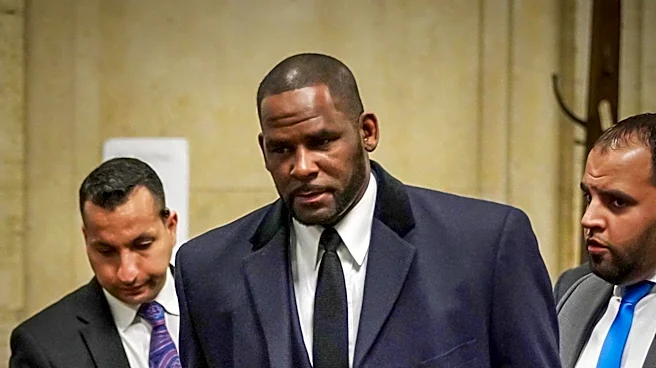
New photos purportedly showing R. Kelly in prison have begun circulating online, reigniting public discussion about his federal convictions and his projected release date. The images, shared by the social media account @mymixtapez, depict Kelly in gray
prison attire and a beanie. However, these images have not been independently authenticated, and the exact date they were taken remains unclear. R. Kelly is currently serving multiple federal sentences for convictions related to racketeering, sex trafficking, and child pornography. His projected release is reported to be in late 2045 or early 2046. At that time, Kelly, who was born in January 1967, would be approximately 78 or 79 years old, rather than 80 as some reports suggest. The social media post featuring these photos garnered over 350,000 views and elicited a range of reactions from the public, highlighting the ongoing division in public opinion regarding his musical legacy versus his criminal actions.
Why It's Important?
The circulation of these images and the subsequent public debate underscore the complex and often conflicting views surrounding public figures convicted of serious crimes. For victims and their advocates, the renewed attention may serve as a reminder of the gravity of Kelly's offenses and the justice served. Conversely, some of his fans continue to separate his artistic contributions from his personal conduct, leading to discussions about the nature of celebrity and accountability. This ongoing public discourse reflects broader societal questions about how to reconcile an artist's work with their criminal actions, and whether one can or should be separated from the other. The divided reactions also highlight the enduring impact of his music on some segments of the public, even as the legal system has definitively condemned his actions. The debate also brings into focus the long-term consequences of such convictions, both for the individual incarcerated and for the public's perception of justice.
What's Next?
While the photos themselves do not alter R. Kelly's legal status or sentence, their circulation is likely to keep his case in the public consciousness. Discussions surrounding his convictions and release date may continue to surface periodically, especially as his projected release approaches. Legal appeals, if any are still active or pursued, could also bring his case back into the spotlight, though the current reports do not indicate any immediate changes to his sentence. For the public, the debate over his legacy is expected to persist, with ongoing tension between those who appreciate his music and those who condemn his crimes. Social media platforms will likely remain a primary venue for these discussions, reflecting evolving societal attitudes towards accountability for public figures. Any future legal developments or official updates regarding his incarceration would undoubtedly reignite media attention.
Beyond the Headlines
The enduring public fascination with R. Kelly's incarceration and the debate surrounding his legacy point to deeper societal issues concerning celebrity worship, the consumption of art, and the justice system. The split in public opinion—between those who defend his music and those who condemn his actions—reveals a struggle to reconcile the artistic persona with the convicted individual. This phenomenon is not unique to R. Kelly but is a recurring theme in cases involving artists accused or convicted of serious offenses. It raises ethical questions about whether art can or should be separated from its creator, and how society grapples with the moral implications of supporting individuals who have committed heinous acts. Furthermore, the continued discussion highlights the long-term psychological and social impact of such high-profile cases on victims, the public, and the broader entertainment industry, prompting ongoing conversations about accountability, rehabilitation, and the role of media in shaping public perception.