









What's Happening?
Many television shows have a history of reusing the same guest actors in different roles across various episodes or seasons. This practice, often unnoticed by viewers, involves actors appearing as one character and then returning later as an entirely
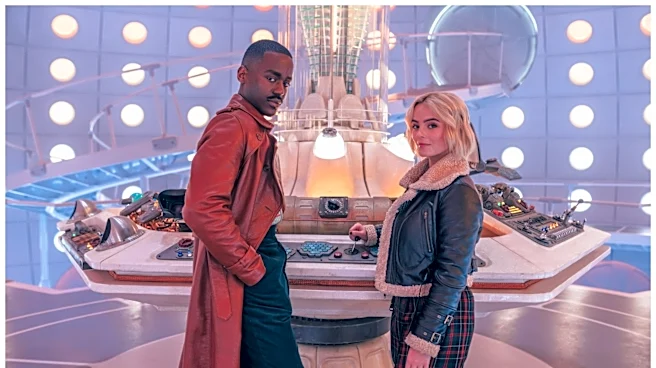
new individual. Examples include Queen Latifah in 'The Fresh Prince of Bel-Air,' who played two different characters, and Justin Theroux in 'Sex and the City,' who portrayed two distinct boyfriends for Carrie. Other instances involve actors like Dean-Charles Chapman in 'Game of Thrones,' who transitioned from Martyn Lannister to Tommen Baratheon, and Peter Capaldi in 'Doctor Who,' who appeared as a Roman citizen before becoming the Twelfth Doctor. This trend highlights a pragmatic approach by casting directors who often rehire talented actors they are familiar with.
Why It's Important?
The practice of reusing actors in different roles within the same television series offers insights into the operational realities of the entertainment industry. It demonstrates how casting decisions can be influenced by factors such as an actor's availability, talent, and previous working relationships with production teams. For actors, this can provide multiple opportunities for employment and exposure, even if the roles are initially minor. For viewers, recognizing these recurring faces can be a source of amusement or a testament to the actor's versatility. This trend also reflects the economic considerations of television production, where familiar and reliable talent might be preferred over an extensive search for new faces, especially for guest or recurring roles. It underscores the interconnectedness of the acting community and the cyclical nature of talent within the industry.
What's Next?
This practice is likely to continue in the television industry, as it offers a practical solution for casting directors and provides opportunities for actors. As the volume of television content increases across various platforms, the demand for reliable talent will remain high. Viewers may continue to spot familiar faces in new roles, adding an interesting layer to their viewing experience. For actors, building a strong reputation and rapport with casting directors and producers can lead to repeated engagements, even if it means playing different characters within the same show. The industry will likely maintain this approach, balancing the need for fresh faces with the efficiency of working with proven talent.
Beyond the Headlines
The phenomenon of actors playing multiple roles in the same series delves into deeper aspects of audience perception and the suspension of disbelief. When an actor reappears, it challenges the viewer's immersion in the fictional world, sometimes requiring a conscious effort to accept the new character. This can also highlight the actor's skill in transforming their persona to be unrecognizable in different roles. Culturally, it speaks to the enduring appeal of certain performers and the trust that audiences place in their ability to deliver compelling performances, regardless of the character. Furthermore, it subtly reveals the behind-the-scenes pragmatism of television production, where artistic integrity sometimes converges with logistical and economic efficiencies, creating a unique dynamic between the creative vision and the practical execution of a show.