


What's Happening?
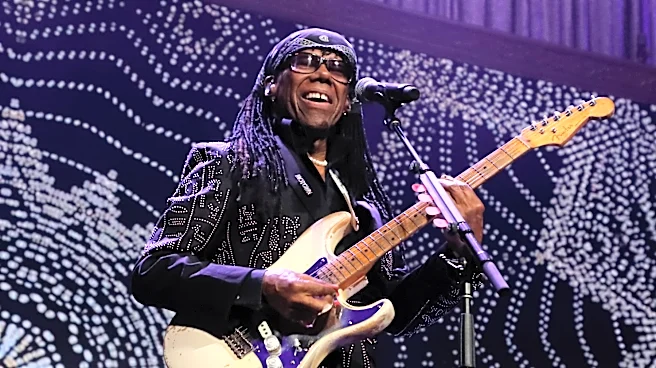
Nile Rodgers, a renowned musician, is defending his use of artificial intelligence (AI) in an upcoming music video for a new version of his 2020 charity collaboration, 'The Christmas Song,' with Rebecca Ferguson. Rodgers initially shared a snippet of the
project, describing it as an 'AI capture' and expressing excitement for the finished product, envisioning 'stories with incredible environments & music.' However, this announcement was met with criticism from some fans who expressed disappointment over his use of generative AI. Rodgers responded to these concerns by stating that 'We created everything. Mood boards, story boards and did it the same way we’d do a film. The AI did what we told it to do and we painstakingly created every second you’ll see on the screen… If this were a traditional film it would’ve cost about $100,000.' He also highlighted his motivation for the video, explaining it's intended to bring joy to bedridden and ill children during the holiday season.
Why It's Important?
Rodgers' defense of AI in his music video highlights a growing debate within the creative industries regarding the role and ethical implications of artificial intelligence. His argument that AI is a tool that can be meticulously controlled by human creators, rather than an autonomous replacement, offers a perspective that could influence how other artists and the public perceive AI's integration into creative processes. The cost-saving aspect he mentioned, with AI potentially reducing production expenses significantly, could also be a compelling factor for independent artists or those with limited budgets, potentially democratizing access to high-quality visual production. However, the backlash from fans underscores concerns about job displacement for human artists and the perceived authenticity of AI-generated content, issues that are central to ongoing discussions about AI's impact on the economy and workforce.
What's Next?
The music video for 'The Christmas Song' is expected to be released by November 20, offering a tangible example of Rodgers' AI-assisted creative vision. Its reception will likely further fuel discussions about AI's place in music and visual arts. The ongoing dialogue between artists, technologists, and the public will continue to shape the development and adoption of AI tools in creative fields. As more artists experiment with AI, there may be a push for clearer guidelines or ethical frameworks to address concerns about intellectual property, fair compensation for human artists, and the definition of 'original' work in an AI-augmented landscape. The music industry, in particular, may see increased pressure to adapt to these technological shifts, potentially leading to new business models or collaborative approaches.
Beyond the Headlines
The controversy surrounding Nile Rodgers' use of AI in his music video touches upon deeper philosophical questions about creativity, authorship, and the nature of art in the digital age. Rodgers' comparison of AI to past technological advancements like drum machines and synthesizers, which were initially met with skepticism but eventually became integral to music production, suggests a cyclical pattern in how new tools are perceived. This development could lead to a re-evaluation of what constitutes 'art' and 'artist' in a world where AI can generate complex creative outputs. Furthermore, the economic implications extend beyond cost savings, potentially impacting the entire ecosystem of creative professionals, from animators and videographers to graphic designers. The ethical considerations of AI's role in art will likely remain a prominent topic, influencing policy decisions and public discourse on technology's societal impact.