




What's Happening?
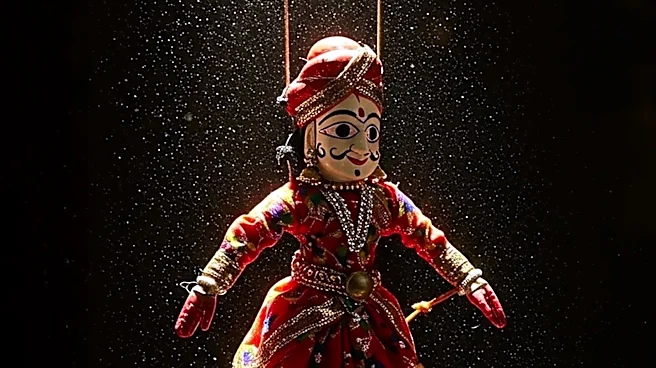
In Mali, the Sogo Bô tradition, which involves masks, puppets, songs, and dances, is a vital cultural practice used to transmit narratives and knowledge. Recognized by UNESCO in 2014, specifically the 'exit of masks and puppets of Markala,' this ritual
is practiced by several communities near Ségou, including the Bambaras, Bozo, Marka, and Somono. The practice varies by location and community, often taking place in village squares or on the Niger River. Sculpted animals, human figures, and mythical characters embody stories related to the inhabitants, their environment, fishing and agricultural activities, and collective life rules. Youth associations, known as 'ton,' play a crucial role in transmitting this tradition, with apprentices learning from elders. Women contribute significantly through songs that enhance the performances. The tradition is a collective effort, mobilizing complementary skills and roles within the community, rather than being performed by an isolated troupe.
Why It's Important?
The UNESCO recognition of the Sogo Bô tradition highlights its global cultural significance and the importance of intangible cultural heritage. This international visibility helps preserve a living practice that fosters social cohesion and inter-village exchanges. However, the source emphasizes that recognition alone does not guarantee the means for its transmission or annual organization. The continuity of Sogo Bô is deeply dependent on local communities, artists, associations, and cultural institutions. The challenges faced by these communities, such as insecurity, economic difficulties, and environmental changes, directly impact their ability to create puppets, rehearse, and gather participants. These factors underscore the fragility of cultural traditions in the face of external pressures and the critical need for sustained local support to ensure their survival.
What's Next?
The future of the Sogo Bô tradition hinges on the capacity of its practitioners to continue transmitting songs, gestures, and narratives, and to maintain community gatherings. While festivals and transmission initiatives can provide platforms for practice, their regularity is subject to resource availability, travel conditions, and varying local circumstances. An exhibition titled 'In Mali, when animals dance' at the Musée des Confluences in Lyon, running until February 7, 2027, aims to showcase this Malian art. However, the exhibition acknowledges that objects separated from their use cannot fully convey the energy of the collective event. The Economic Community of West African States (ECOWAS) provides a regional framework for dialogue, but the transmission of this tradition remains primarily rooted in the Malian communities that keep it alive.
Beyond the Headlines
The Sogo Bô tradition exemplifies the intricate relationship between cultural heritage and community resilience. Its survival is not merely about preserving ancient rituals but about sustaining the social fabric and collective memory of the Malian people. The challenges of insecurity and economic hardship reveal how geopolitical and socio-economic factors can directly threaten cultural practices, making their preservation a matter of human rights and cultural identity. The distinction between exhibiting cultural artifacts in a museum and experiencing a living tradition underscores the ethical considerations in cultural preservation. While international recognition and exhibitions offer visibility, the true custodians are the local communities whose daily lives and intergenerational knowledge transfer are essential for the tradition's continuity. This highlights a broader global issue: how to support indigenous cultural practices without detaching them from their original context and meaning.