



What's Happening?
Apoorv Agrawal, a Partner at Altimeter, a firm specializing in AI and software investing, has identified Michael Truell, founder of Cursor, as a leading indicator of talent in the rapidly evolving artificial intelligence sector. Agrawal emphasizes that
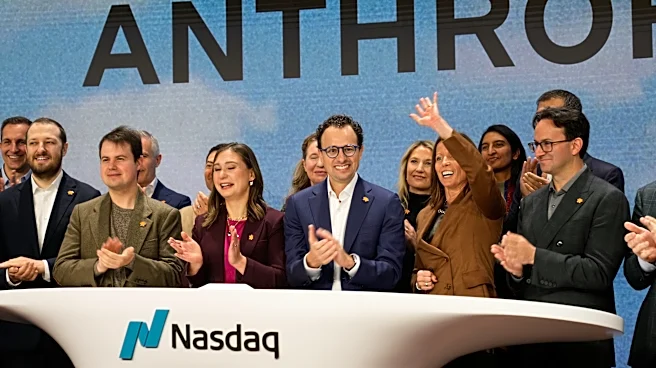
Altimeter prioritizes the founding team as a crucial indicator of success in AI ventures. Truell's leadership at Cursor is cited alongside Bob McGrew, an early engineer at Palantir and former research lead at OpenAI, as examples of individuals making ambitious bets in the AI space. This recognition comes as Altimeter continues to make significant investments in AI companies, including co-leading Anthropic's Series H funding and making OpenAI its largest investment. The AI market is experiencing substantial growth, with AI-related capital expenditure approaching $860 billion annually, rivaling the U.S. defense budget.
Why It's Important?
The recognition of Michael Truell and other founders as 'leading indicators' by a prominent investment firm like Altimeter underscores a significant trend in the U.S. AI industry: the increasing importance of visionary leadership and technical expertise in driving innovation and investment. This approach suggests that in a sector characterized by rapid technological advancements and high capital expenditure, the quality and track record of founding teams are paramount for investors. For the broader U.S. economy, this focus on talent can influence where venture capital flows, potentially accelerating the development of new AI technologies and applications. Companies led by such recognized figures are likely to attract more funding and resources, fostering a competitive environment that could lead to breakthroughs in various AI workloads, including cybersecurity, which Agrawal identifies as a major emerging market. This also highlights the strategic shift in investment criteria, where traditional financial metrics are complemented by an assessment of human capital and ambitious vision.
What's Next?
The continued emphasis on strong founding teams, as exemplified by Michael Truell, suggests that future investment in the U.S. AI sector will likely prioritize companies with proven leadership and innovative approaches. This could lead to increased competition for top talent in the AI field, as firms seek to replicate the success seen in companies like Cursor. As AI-related capital expenditure continues to grow, potentially reaching new heights, the demand for skilled engineers, researchers, and visionary leaders will intensify. This trend may also influence educational institutions and government initiatives to focus on developing a robust pipeline of AI talent. Furthermore, the identified emerging market in cybersecurity, driven by AI, indicates a future where AI solutions will play a critical role in national security and corporate defense strategies, potentially leading to significant investments and policy developments in this area.
Beyond the Headlines
The focus on individual founders like Michael Truell as 'leading indicators' reflects a deeper cultural and economic shift within the U.S. technology landscape. It highlights the 'founder worship' phenomenon, where the perceived genius and ambition of a single individual can disproportionately influence investment decisions and market perceptions. While this can foster rapid innovation and risk-taking, it also raises questions about the sustainability of such a model and the potential for over-reliance on charismatic figures rather than robust organizational structures. Ethically, it prompts consideration of how credit and responsibility are distributed within complex AI development processes. Legally, the rapid growth and high stakes in AI, coupled with significant capital flows, could lead to increased scrutiny regarding intellectual property, data privacy, and market concentration. This trend also signifies a long-term shift towards an economy where intangible assets, such as human ingenuity and strategic vision, are increasingly valued over traditional tangible assets, shaping the future of U.S. industry and global competitiveness.