


What's Happening?
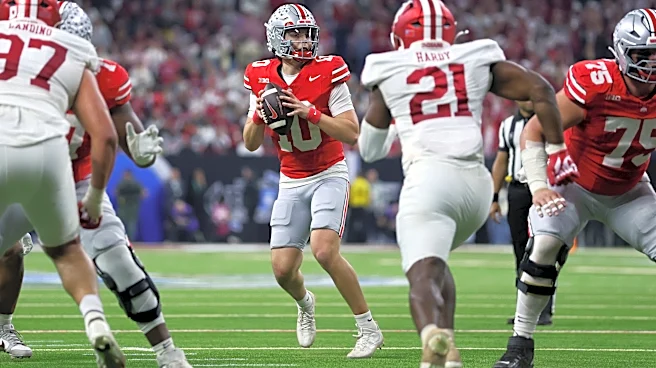
The opening week of the college football season has concluded with several top-ranked teams securing decisive victories. No. 1 Ohio State defeated Ball State 56-3, showcasing strong performances from quarterback Julian Sayin and receiver Jeremiah Smith.
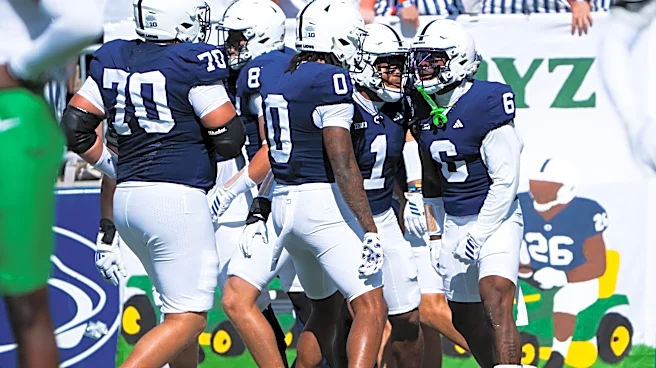
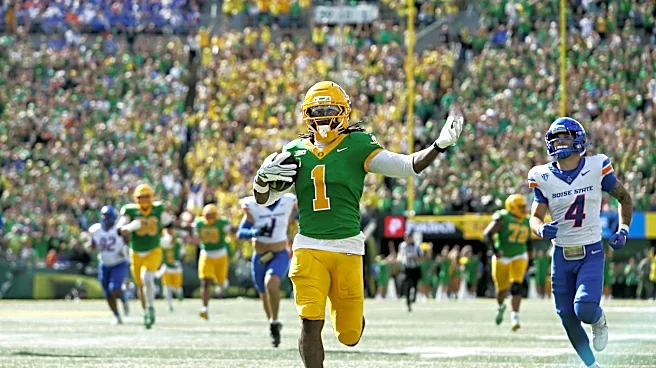
Other notable wins include No. 2 Oregon over Boise State (34-27), No. 3 Georgia against Tennessee State (63-3), and No. 5 Texas dominating Texas State (59-7). No. 6 Indiana, No. 7 Miami (FL), No. 10 Oklahoma, No. 13 Alabama, No. 14 USC, No. 18 Penn State, No. 20 Tennessee, No. 21 Utah, No. 23 Houston, and No. 25 Missouri also recorded significant wins. A major upset occurred on Thursday night when 29.5-point underdog UMass defeated Rutgers, ending a 16-game losing streak for UMass. The week highlighted both the expected dominance of top programs and the potential for unexpected outcomes early in the season.
Why It's Important?
The initial results of Week 1 are crucial for setting the tone for the college football season, influencing early national rankings and team morale. Strong performances from top-ranked teams like Ohio State, Oregon, and Georgia reinforce their positions as contenders for national championships, which can impact fan engagement, media coverage, and potential playoff considerations. The upset victory by UMass over Rutgers is significant as it demonstrates the unpredictable nature of college football and can provide a much-needed boost for a program that has struggled, potentially attracting more attention and resources. These early games also serve as a critical evaluation period for coaching staffs to assess player performance and identify areas for improvement, shaping strategies for the remainder of the season. The outcomes can also affect betting markets and sports viewership, which are major components of the sports industry.
What's Next?
Following Week 1, teams will review game film and begin preparations for their next matchups, with coaches making adjustments based on initial performances. The College Football Playoff rankings will start to take shape in the coming weeks, influenced by these early results and subsequent games. Teams that performed well will aim to maintain momentum, while those that struggled or faced upsets will look to rebound. Media narratives will develop around standout players and teams, potentially influencing Heisman Trophy discussions and national championship predictions. Fans will eagerly anticipate how these early results translate into conference play and the broader national landscape as the season progresses. The focus will shift to how teams handle increased competition and pressure in the weeks to come.
Beyond the Headlines
Beyond the immediate scores, Week 1 often reveals underlying trends in college football, such as the effectiveness of new coaching strategies, the impact of player transfers, and the emergence of new talent. The dominance of top programs highlights the ongoing disparity in resources and recruiting capabilities within college football, which can lead to discussions about competitive balance. The UMass upset, while a single game, can symbolize the enduring hope for underdog teams and the potential for unexpected narratives that captivate audiences. These early games also contribute to the broader economic ecosystem of college sports, including ticket sales, merchandise, and television rights, which have significant financial implications for universities and athletic conferences. The season's opening week is a microcosm of the sport's blend of tradition, competition, and commercial enterprise.