
What's Happening?
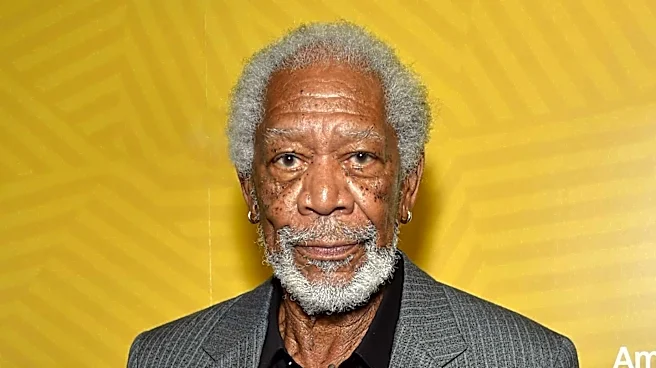
Revelations Entertainment, the production company co-founded by Academy Award-winning actor Morgan Freeman and Emmy-nominated producer Lori McCreary, is actively exploring the integration of artificial
intelligence (AI) into its operations. This move comes after instances where AI was used to illegally copy Freeman's voice without his consent, prompting concerns about the misuse of technology. McCreary recounted an incident where Freeman did not recognize his own voice in a video clip, leading the company to prioritize staying ahead of AI advancements. Revelations Entertainment, known for its commitment to 'artistic integrity with technological innovation,' is currently utilizing AI on a project and is engaged in discussions with legal experts regarding consent capture and compensation for on-screen talent in the age of AI. The company's history includes pioneering ventures like the movie service ClickStar in 2006, which allowed consumers to download films, demonstrating a consistent effort to leverage technology in storytelling.
Why It's Important?
The proactive stance of Revelations Entertainment in addressing AI's implications for creative industries is significant for several reasons. The unauthorized use of Morgan Freeman's voice highlights a growing challenge for artists and content creators regarding intellectual property rights and digital identity in the era of advanced AI. The company's engagement with legal counsel to establish frameworks for consent and compensation could set precedents for how talent is protected and remunerated when AI is used to replicate their likeness or voice. This development is crucial for the entertainment industry, which is grappling with the ethical and practical challenges posed by generative AI. It underscores the need for robust legal and ethical guidelines to ensure that technological innovation does not infringe upon artists' rights, potentially influencing future industry standards and legislative efforts to regulate AI's use in creative fields.
What's Next?
Revelations Entertainment is in the process of defining new protocols for AI integration, including legal discussions on consent and compensation for talent. This suggests that the company may develop a model for ethical AI use in production that could influence broader industry practices. Producer Lori McCreary believes that generative AI could be beneficial for independent filmmakers, enabling them to produce visually ambitious projects without large budgets, such as creating 'beautiful helicopter-like shots.' However, Morgan Freeman has expressed a personal preference against being artificially created by AI unless it's for actions he physically cannot perform, like flying. The company is also adapting Arthur C. Clarke's novel 'Rendezvous with Rama,' a project expected to push boundaries in both storytelling and filmmaking techniques, potentially showcasing their evolving approach to AI.
Beyond the Headlines
The situation with Morgan Freeman's voice being illegally copied by AI brings to light deeper ethical and legal questions surrounding digital identity and ownership in the digital age. As AI technology advances, the ability to replicate voices, images, and even personalities becomes more sophisticated, blurring the lines between original content and AI-generated facsimiles. This raises concerns about potential misuse, including deepfakes and unauthorized commercial exploitation, which could have profound implications for public trust and individual privacy. Revelations Entertainment's efforts to 'get ahead of this' reflect a broader industry struggle to balance technological innovation with ethical responsibility. The ongoing discussions about consent and compensation are not just about financial remuneration but also about maintaining artistic control and personal agency in an increasingly AI-driven creative landscape, potentially shaping future legal frameworks for digital rights.