




What's Happening?
The Viet Nam National Village for Ethnic Culture and Tourism in Hanoi is undergoing significant development to become a prominent cultural tourism destination. This special national cultural institution, spanning approximately 1,544 hectares, is designed
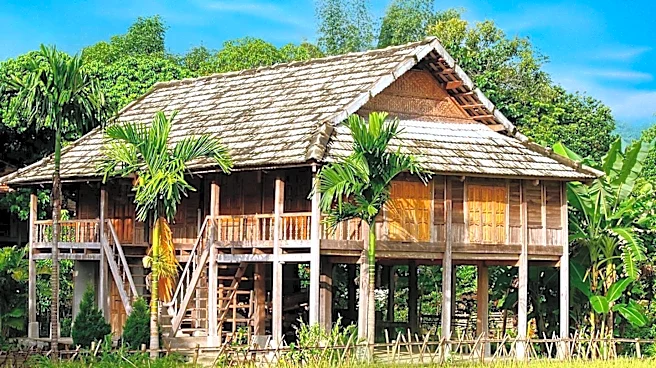
to preserve and honor the cultural identities of Vietnam's 54 ethnic groups. Located within the landscape of Dong Mo Lake, the village aims to integrate cultural values into attractive tourism products. The Hanoi Department of Culture, Sports and Tourism recently organized a survey and promotion program to connect management agencies, experts, associations, and travel businesses, seeking new strategies for exploitation. The village currently maintains activities involving 16 ethnic community groups, recreating their cultural life, architecture, customs, and practices. Annually, it hosts over 70 visits by ethnic communities, more than 1,000 ethnic minority individuals, and around 200 artisans and small traders. It also organizes nearly 80 cultural and tourism programs and events, including the recreation of over 20 traditional festivals, attracting approximately 600,000 visitors per year.
Why It's Important?
This initiative is crucial for Vietnam's cultural preservation and economic development. By transforming preserved cultural values into tourism products, the project aims to create a 'Western Tourism-Cultural Industry Growth Pole of the Capital,' linking culture, tourism, cultural industries, services, and the green economy. This development is expected to significantly boost the tourism sector in the Ba Vi-Son Tay area and Hanoi as a whole. The focus on intangible cultural heritage, such as traditional performing arts like Đờn ca tài tử and Cải lương, which are currently underdeveloped in tourism offerings, could provide unique and authentic experiences for visitors. The project's goal of attracting 1-1.2 million visitors by 2030, with 5% being international tourists, signifies a substantial economic impact through increased tourist spending, job creation, and infrastructure development. Furthermore, the recognition of the village as a national tourism area during the 2030-2035 period would elevate its status and attract further investment and attention, contributing to the sustainable development of cultural tourism in the region.
What's Next?
The Viet Nam National Village for Ethnic Culture and Tourism is set to continue its development trajectory, with a clear goal of becoming a national tourism area between 2030 and 2035. Efforts will focus on transforming existing cultural values into more engaging tourism products and experiences. This includes enhancing the integration of traditional performing arts and other intangible cultural heritage into visitor offerings. The ongoing survey and promotion programs will likely lead to new collaborations between government bodies, tourism experts, and private businesses to refine strategies for market outreach and product diversification. The village will also work towards increasing its international visitor numbers to meet the 5% target by 2030. Future steps will involve further investment in infrastructure, marketing campaigns, and the development of unique experiential activities to attract a broader range of domestic and international tourists, solidifying its position as a key cultural destination in Hanoi.
Beyond the Headlines
The development of the Viet Nam National Village for Ethnic Culture and Tourism represents a broader trend in global tourism towards experience-based and cultural heritage tourism. This project highlights the ethical dimension of balancing cultural preservation with commercialization. The challenge lies in ensuring that the recreation and presentation of ethnic cultures remain authentic and respectful, avoiding commodification that could dilute their original meaning or exploit the communities involved. The long-term success of the village will depend on its ability to foster genuine cultural exchange and provide economic benefits directly to the ethnic groups whose heritage is being showcased. This initiative could also serve as a model for other nations seeking to leverage their diverse cultural heritage for sustainable tourism, while simultaneously addressing issues of cultural identity, community empowerment, and environmental sustainability in tourism development.