




What's Happening?
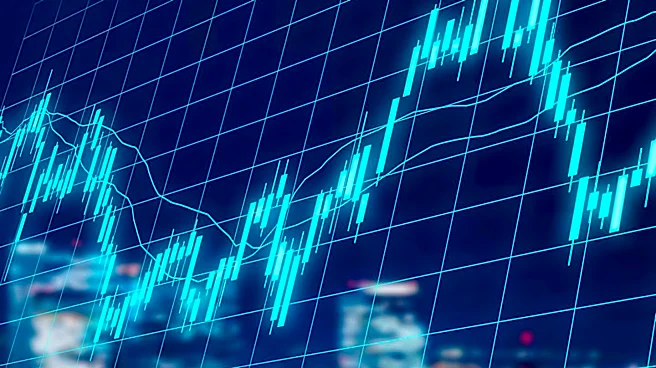
The U.S. Treasury market is currently experiencing an inverted yield curve, specifically with the 10-year and 2-year Treasury spread. This phenomenon occurs when short-term government bonds offer higher yields than long-term bonds, a reversal of normal
economic conditions where longer-term investments typically compensate investors for increased risk over time. Historically, this inversion has been a primary recession indicator in the U.S., preceding economic downturns by 6 to 24 months. The current situation reflects a market anomaly where investors are paid more for lending money for a short period than for a long period, often driven by central banks raising short-term interest rates to combat inflation, while investors seek the safety of long-term bonds, driving their yields down.
Why It's Important?
The inverted yield curve is a significant economic signal because of its consistent historical track record in predicting U.S. recessions since 1955. While not an immediate alarm, it serves as a strong indicator of a potential future economic contraction. This market behavior suggests that bond investors anticipate an economic slowdown, leading them to flock to long-term bonds for safety, which in turn pushes their prices up and yields down. For individual investors, this signal often prompts a review of risk tolerance, a focus on maintaining emergency cash reserves, and a cautious approach to speculative investments as the business cycle potentially nears its end. The inversion highlights concerns about future economic growth and stability.
What's Next?
While an inverted yield curve does not guarantee a recession, it strongly suggests that economic policymakers and businesses should prepare for a potential downturn within the next 6 to 24 months. Central banks may attempt a 'soft landing' to avoid a full economic contraction, but the market's current behavior indicates a significant shift in economic expectations. Investors will likely continue to monitor other economic indicators, such as unemployment rates, payroll growth, credit spreads, and consumer spending, in conjunction with the yield curve to gauge the severity and timing of any impending recession. The Federal Reserve's actions regarding interest rates will also be crucial in shaping the economic landscape.
Beyond the Headlines
The inverted yield curve reflects a deeper market sentiment regarding the future health of the U.S. economy. It underscores the tension between efforts to control inflation through higher short-term rates and the market's anticipation of slower economic activity. This dynamic can influence corporate investment decisions, hiring practices, and consumer confidence, potentially leading to a self-fulfilling prophecy if businesses and individuals react by reducing spending and investment. The phenomenon also highlights the complex interplay between monetary policy, investor behavior, and economic cycles, demonstrating how financial market signals can provide early warnings of broader economic shifts, even if the exact timing and magnitude of these shifts remain uncertain.