





What's Happening?
According to ING THINK, oil prices edged higher in early trading after falling below $90 per barrel, primarily due to lingering geopolitical risks, particularly the uncertainty surrounding the U.S.-Iran conflict. This geopolitical tension continues to provide
support for oil prices, even as expectations of improved Middle Eastern supply availability and bearish U.S. inventory data weigh on the market. U.S. inventory data from the API showed crude stocks increasing by 9 million barrels last week, significantly higher than the expected draw of approximately 0.6 million barrels. Inventories at Cushing also rose by 182,000 barrels, while gasoline stocks remained largely unchanged and distillate inventories increased by 1.5 million barrels. The EIA's latest outlook projects continued growth in U.S. crude production, with a slightly lowered 2026 forecast of 13.86 million barrels per day, still 200,000 barrels per day higher year-on-year, and a 2027 forecast of 14.3 million barrels per day. Despite signs from Middle Eastern producers like ADNOC reducing premiums, supply risks persist, notably from reported damage to Russian energy infrastructure following Ukrainian drone attacks.
Why It's Important?
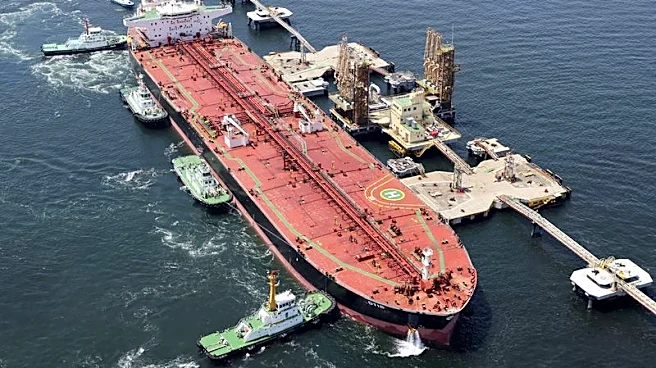
The volatility in oil prices, driven by geopolitical tensions and U.S. inventory data, has significant implications for the U.S. economy and consumers. Higher oil prices translate to increased costs for gasoline and diesel, impacting transportation, manufacturing, and overall consumer spending. The EIA's raised gasoline and diesel price forecasts for next year reflect continued tightness in fuel markets, which could contribute to inflationary pressures. For U.S. energy producers, continued growth in domestic crude production, as projected by the EIA, offers a degree of energy security and potential economic benefits. However, the persistent global supply risks, exacerbated by geopolitical conflicts, mean that the U.S. remains vulnerable to external shocks that can disrupt supply chains and drive up energy costs, affecting various sectors from logistics to agriculture. The Strait of Hormuz remains a critical chokepoint, and any disruptions there could quickly escalate market volatility.
What's Next?
Attention will now turn to the official EIA data for further confirmation of U.S. inventory levels and production forecasts. The ongoing U.S.-Iran conflict and the situation in the Strait of Hormuz will remain key drivers for the oil market. Any de-escalation or improvement in regional flows could lead to a reduction in the geopolitical premium on oil prices. Conversely, continued disruptions or further escalation of conflicts, such as attacks on Russian energy infrastructure, could lead to renewed upside in oil prices. Middle Eastern producers' actions, such as ADNOC's reduction in crude premiums, suggest an expectation of improving supply conditions, but this could be offset by other geopolitical events. U.S. policymakers will likely monitor these developments closely, as sustained high energy prices could necessitate strategic responses to mitigate economic impacts on consumers and industries.
Beyond the Headlines
The deeper implication of these persistent geopolitical risks in the oil market is the ongoing challenge to global energy security and the transition to renewable energy. While the U.S. is increasing its domestic production, the interconnectedness of global energy markets means that regional conflicts can still have far-reaching effects. This volatility underscores the strategic importance of diversifying energy sources and investing in renewable technologies to reduce reliance on fossil fuels from politically unstable regions. Furthermore, the economic burden of higher energy prices, particularly on lower-income households, could exacerbate social inequalities and potentially lead to calls for government intervention or subsidies. The interplay between geopolitical events and commodity markets highlights the complex web of factors influencing global economic stability and the need for robust risk management strategies for businesses and governments alike.