








What's Happening?
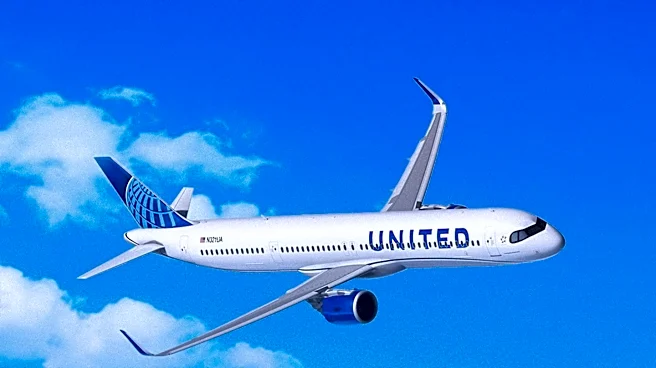
United Airlines CEO Scott Kirby stated that Starlink, SpaceX's high-speed WiFi service, is becoming a primary factor for passengers when selecting an airline, potentially even more so than ticket prices. United Airlines has been a leader in the U.S. in installing
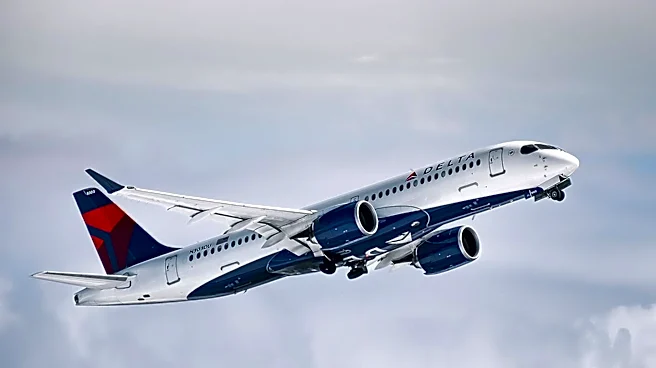
Starlink, having equipped nearly half of its aircraft with the service since signing up in 2024. Notably, all of United's regional airplanes, operating under the United Express brand, now feature Starlink. Kirby expressed surprise, stating 'Holy cow!', upon learning that some travelers are specifically choosing flights on these smaller regional planes to ensure access to Starlink. He also recounted a personal experience where he would have booked a flight during a Milwaukee Brewers game if he had guaranteed Starlink access. While American Airlines has also partnered with Starlink, their installations are not expected to begin until early next year. Delta Air Lines, conversely, has opted for Amazon Leo, a competing service slated for a 2028 launch, a decision that has drawn criticism from Elon Musk.
Why It's Important?
This development signifies a potential shift in airline industry competition, moving beyond traditional factors like price and schedule to in-flight connectivity. United Airlines' aggressive adoption of Starlink could provide a significant competitive advantage, attracting customers who prioritize reliable and fast internet access during their travels. The willingness of passengers to choose regional flights specifically for Starlink access underscores the growing demand for seamless connectivity, even influencing route preferences. This trend could pressure other airlines to accelerate their own in-flight WiFi upgrades to remain competitive, potentially leading to substantial investments across the industry. The differing strategies of major carriers—United with Starlink, American following suit, and Delta pursuing Amazon Leo—set the stage for a technology-driven battle for market share, where the quality and availability of internet service could become a crucial differentiator for passenger loyalty and revenue.
What's Next?
United Airlines plans to leverage its current lead in Starlink implementation to attract customers from rival airlines. The company recently launched a promotion offering to match loyalty statuses from Delta or American, explicitly advertising 'the fastest WiFi in the sky.' This initiative has already seen a significant response, with status match applications increasing by 275% compared to pre-campaign levels, indicating a strong interest from passengers. While Kirby acknowledges that Starlink's competitive edge is temporary, as high-speed low Earth orbit internet connectivity will eventually become standard across the industry, United aims to capitalize on this advantage for the next few years. The success of United's strategy could prompt American Airlines to expedite its Starlink installations and encourage Delta to accelerate the deployment of Amazon Leo, intensifying the race for superior in-flight connectivity. The long-term outcome will likely see high-speed internet becoming a 'must-have' feature for all airlines.
Beyond the Headlines
The emphasis on Starlink as a primary passenger decision factor highlights a broader societal trend: the increasing expectation of constant, high-quality connectivity in all aspects of life, including air travel. This shift could redefine the passenger experience, transforming flights from periods of digital disconnection into extensions of daily connected life. For the airline industry, it implies a need to integrate advanced technology not just as an amenity, but as a core service offering. This could also lead to new business models, such as premium internet packages or partnerships with content providers, further monetizing in-flight connectivity. Furthermore, the competition between Starlink and Amazon Leo reflects a larger battle among tech giants to dominate various sectors, with airlines becoming a new frontier for satellite internet providers. The long-term implications could include a more digitally integrated travel ecosystem, where personalized services and real-time information become standard, fundamentally altering how passengers interact with airlines and their journey.