


What's Happening?
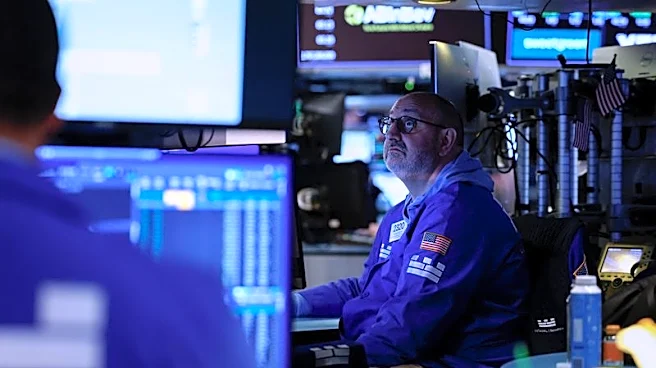
The Federal Reserve is now less likely to raise interest rates in September following a weaker-than-expected jobs report for July. The U.S. economy unexpectedly lost 23,000 jobs, contrary to forecasts of an 80,000 job increase. This has led to a significant
drop in the probability of a rate hike, with prediction markets like Kalshi now showing a 65% chance that rates will remain steady. Similarly, the CME's FedWatch tool indicates a 60% likelihood of no change in rates. The disappointing jobs data has resulted in lower Treasury yields and a rise in stock prices as investors adjust their expectations for the Federal Reserve's rate path.
Why It's Important?
The unexpected job losses in July have shifted market expectations regarding the Federal Reserve's monetary policy. A rate hike could have slowed economic growth further, but the current labor market weakness suggests that maintaining the status quo might be more prudent. This development impacts various stakeholders, including investors, businesses, and consumers, as interest rates influence borrowing costs and economic activity. The decision to hold rates steady could provide relief to markets concerned about the potential negative effects of higher rates on economic recovery.
What's Next?
Attention will now turn to the upcoming Consumer Price Index report, which will provide further insights into inflation trends. The Federal Reserve will likely consider this data before making any decisions on interest rates. If inflation remains high, the central bank may still face pressure to raise rates despite the weak labor market. The outcome of these economic indicators will be crucial in determining the Federal Reserve's next steps.