






What's Happening?
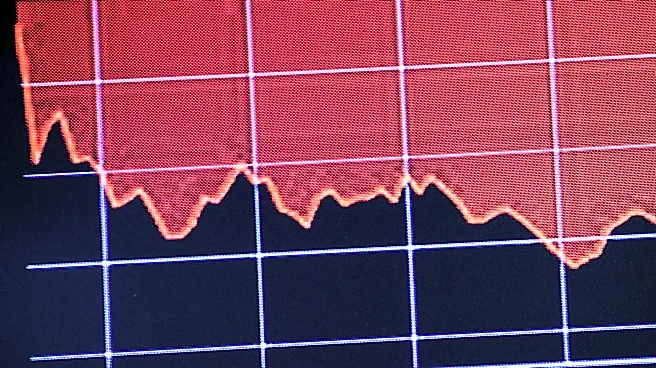
Tokyo Electron's stock experienced a 7.06% decline, closing at 8,309 yen on November 20, as part of a broader sell-off in chip-equipment companies that also affected Lasertec and Renesas. This downturn is attributed to global investors questioning the
sustainability of increasing AI capital spending. Despite these market concerns, Tokyo Electron reported robust financial performance for the first half of its fiscal year, with revenue rising 41.3% to 1.67 trillion yen and operating income jumping 67.2% to 506.8 billion yen, exceeding its own projections. The company's full-year forecast through March 2027 anticipates 3.7 trillion yen in revenue, 1.169 trillion yen in operating income, and 865 billion yen in net income, supported by a share buyback program of up to 150 billion yen. Nomura maintained a 'Buy' rating for Tokyo Electron with a target of 12,600 yen.
Why It's Important?
The decline in Tokyo Electron's stock, despite its strong financial results and optimistic forecasts, highlights a significant shift in investor sentiment within the technology sector, particularly concerning artificial intelligence. This skepticism about the long-term growth trajectory of AI capital spending could impact U.S. technology companies and the broader market. As a key player in the chip-equipment industry, Tokyo Electron's performance is often seen as a bellwether for the semiconductor sector. A sustained questioning of AI investment could lead to reduced demand for advanced chip manufacturing equipment, affecting U.S. semiconductor firms and their supply chains. This situation suggests that even companies with solid fundamentals may face headwinds if broader market narratives, such as the sustainability of AI growth, turn negative. The market's reaction indicates a potential re-evaluation of tech valuations, which could influence investment strategies and capital allocation across the U.S. tech landscape.
What's Next?
Investors will closely monitor Tokyo Electron's upcoming third-quarter report on February 5, 2027, which will provide further insight into the company's ability to achieve its projected second-half operating income of approximately 662 billion yen, a 31% increase over the first half. This report will be a critical test of the market's current skepticism versus the company's optimistic outlook. Should Tokyo Electron meet or exceed these targets, it could help alleviate some of the current investor concerns regarding AI capital spending. Conversely, any shortfall could intensify the sell-off in chip-equipment stocks and potentially trigger further re-evaluations of AI-related investments across global markets, including the U.S. The broader market will also be watching for any further indications of a slowdown in AI infrastructure orders, similar to the situation with Japanese data center operator Datasection, which could signal a wider trend.
Beyond the Headlines
The market's reaction to Tokyo Electron's stock, despite its strong performance, underscores a deeper concern about the speculative nature of the current AI boom. This situation raises questions about whether the rapid pace of AI investment is sustainable or if it's creating a bubble similar to past tech cycles. The emphasis on future growth projections over current profitability suggests that investors are increasingly sensitive to any signs of deceleration in the AI sector. This could lead to a more cautious approach to funding AI startups and projects, potentially impacting innovation and the competitive landscape. Furthermore, the interconnectedness of global chip supply chains means that a slowdown in one major player like Tokyo Electron could have ripple effects, influencing the development and deployment of AI technologies worldwide, including in the U.S., and potentially altering the long-term trajectory of the AI industry.