








What's Happening?
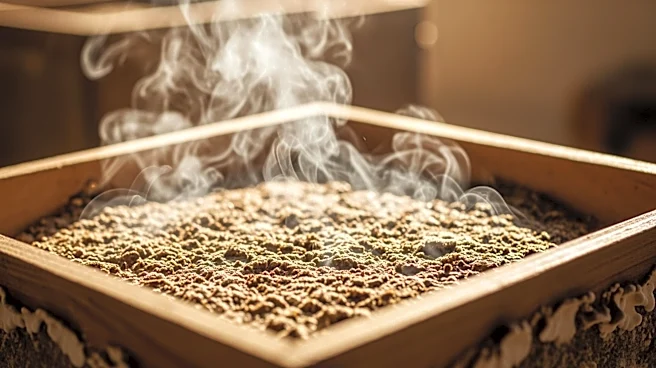
A study has modeled the odor profiles of fungal solid-state fermentation (SSF) using various substrates and fungi. Researchers identified 156 volatile organic compounds (VOCs) and categorized them into distinct odor profiles. The study utilized the Weber-Fechner
law to predict odor intensity based on VOC concentrations. Findings revealed that certain VOCs dominate the odor profile, influencing categories like baked, earthy, and fruity. The research highlights the complexity of odor perception and the potential for SSF to modify food odors, which could impact food processing and product development.
Why It's Important?
Understanding the odor profiles of SSF is crucial for the food industry, as it can influence consumer acceptance and product development. By identifying key VOCs and their impact on odor, the study provides insights into how fermentation processes can be optimized to enhance desirable flavors and minimize off-putting odors. This research could lead to improved fermentation techniques and the development of new food products with enhanced sensory qualities, benefiting both producers and consumers.
What's Next?
Future research may focus on refining the odor prediction models and exploring the interactions between VOCs in more complex food systems. There is also potential for applying these findings to other fermentation processes and food products, expanding the scope of odor optimization in the food industry. Additionally, collaborations with sensory scientists could further validate the model's predictions and enhance its applicability in real-world settings.