





What's Happening?
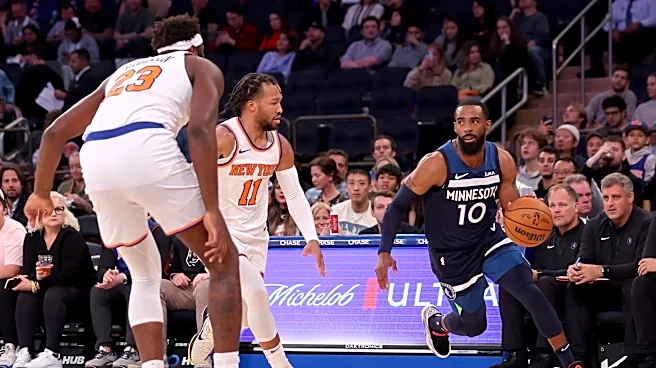
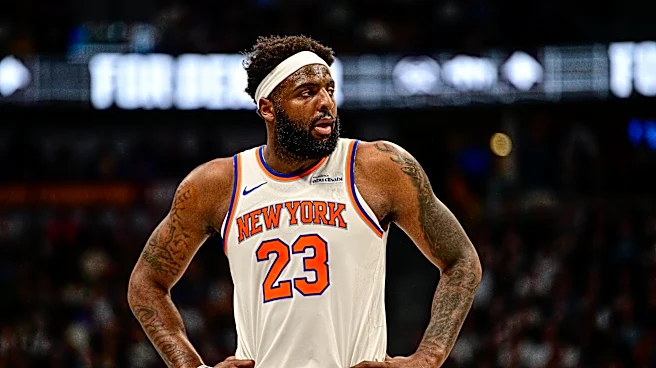
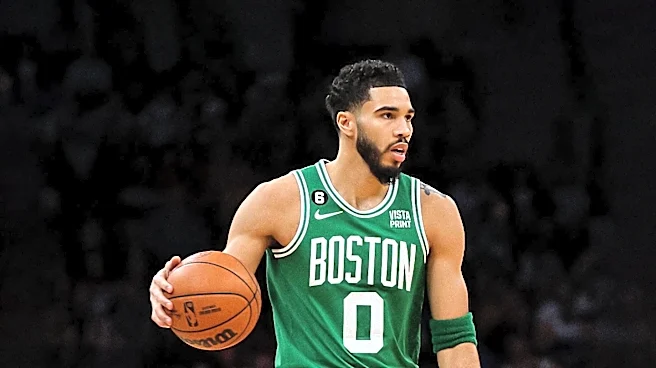
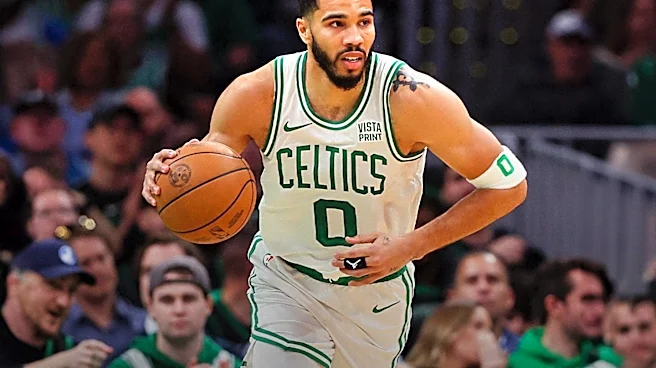
Mitchell Robinson, a veteran center, has left the New York Knicks to join the Boston Celtics, signing a three-year, $47.4 million contract with a player option in the third year. This move ends his tenure as the longest-serving player on the Knicks' roster
and has stirred reactions among fans and former teammates. Robinson's departure was marked by a cryptic message to his former teammate OG Anunoby, suggesting that he did not want to leave New York. The decision to join a division rival like the Celtics has been met with mixed emotions, particularly from Knicks fans who expressed their disappointment on social media. Robinson's move is seen as a strategic financial decision, as the Knicks were reportedly unable to offer a competitive contract due to financial constraints imposed by team owner James Dolan, who emphasized the importance of staying below the NBA's second salary cap apron.
Why It's Important?
Robinson's transfer to the Celtics is significant for several reasons. It highlights the financial challenges faced by NBA teams in managing player contracts under the league's salary cap rules. The Knicks' inability to retain Robinson due to financial restrictions underscores the complexities of team management and the impact of salary cap regulations on player retention. For the Celtics, acquiring Robinson strengthens their roster with a proven rebounder and rim protector, potentially enhancing their competitiveness in the Eastern Conference. This move also shifts the dynamics within the division, as Robinson's presence on the Celtics could pose a challenge to his former team. The situation reflects broader trends in the NBA, where financial considerations often dictate player movements and team strategies.
What's Next?
As Robinson integrates into the Celtics, attention will turn to how he adapts to his new team and contributes to their performance. The Celtics will likely focus on leveraging Robinson's defensive skills to bolster their lineup. Meanwhile, the Knicks may need to explore alternative strategies to fill the void left by Robinson's departure, possibly through trades or developing existing talent. Fans and analysts will be watching closely to see how Robinson's move impacts the Celtics' performance in the upcoming season and whether the Knicks can maintain their competitive edge without him. The broader implications for the NBA include ongoing discussions about salary cap management and its influence on team composition and player careers.