

What's Happening?
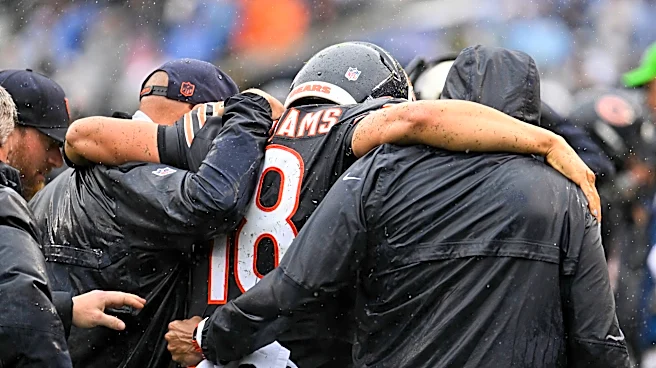
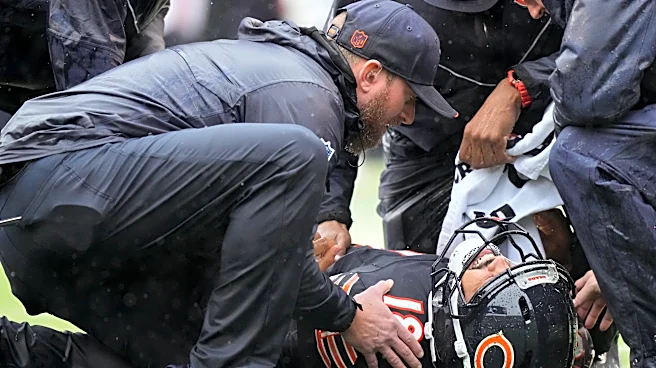
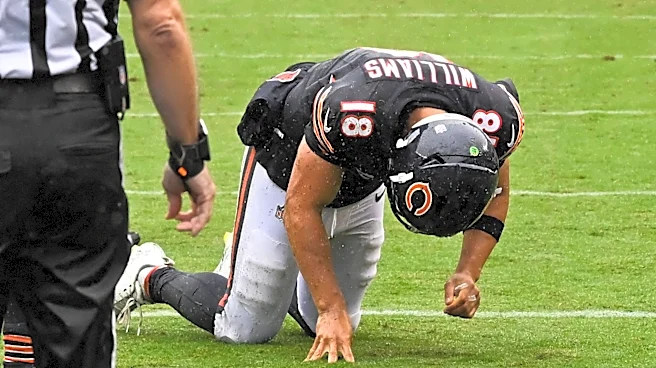
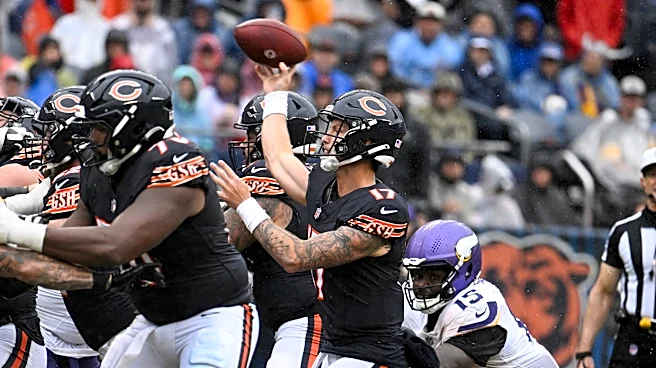
Chicago Bears quarterback Caleb Williams is considered 'week-to-week' after suffering a right hamstring injury during the team's 9-3 loss to the Minnesota Vikings. Head coach Ben Johnson confirmed the injury status on Monday, following an MRI exam. While
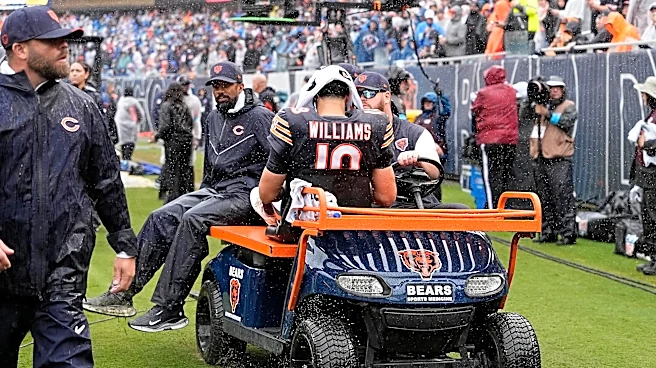
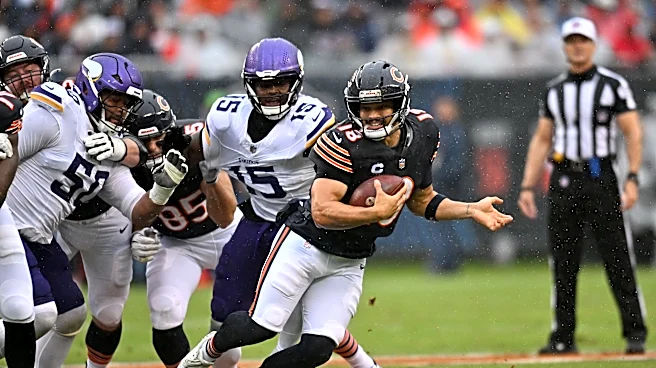
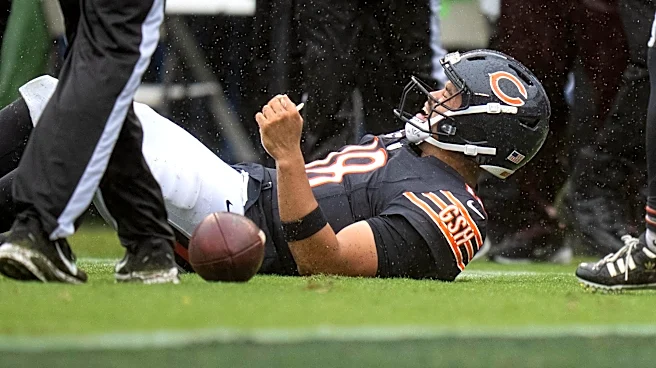
the team expects Williams to miss some time, the report on the injury was described as 'somewhat encouraging,' indicating it is not a major injury. Williams exited Sunday's game in the fourth quarter after a scramble and was visibly emotional as he was carted off the field. However, he was later seen walking in the locker room with only a 'slight limp.' Johnson stated that Williams is actively working on his recovery and that his return timeline is uncertain, emphasizing Williams' history of recovering faster than anticipated. The coach also mentioned that Williams is unlikely to practice this week.
Why It's Important?
The injury to Caleb Williams, a key player for the Chicago Bears, carries significant implications for the team's performance and strategic planning. As a starting quarterback, his absence could disrupt offensive rhythm and impact game outcomes, potentially affecting the team's standing in the league. For fans and stakeholders, the uncertainty surrounding his return creates anxiety and could influence viewership and team merchandise sales. From a broader sports perspective, quarterback injuries often lead to increased scrutiny of player safety protocols and training methods. The reliance on backup quarterback Tyson Bagent, who has limited starting experience in the NFL, highlights the critical role of depth in professional sports and the challenges teams face when primary players are sidelined. This situation also underscores the physical demands of professional football and the constant risk of injury to high-value athletes.
What's Next?
The immediate next step for the Chicago Bears will be to monitor Caleb Williams' hamstring injury closely and determine his availability on a week-to-week basis. Head coach Ben Johnson has indicated that Williams is unlikely to practice this week, suggesting that backup quarterback Tyson Bagent will likely prepare to start. The team will need to adjust its offensive strategy to accommodate Bagent's strengths and minimize weaknesses, potentially altering play-calling and game plans. Fans and media will be keenly watching for updates on Williams' recovery progress, as his return could significantly impact the team's trajectory for the season. The situation also puts Bagent in a spotlight, offering him an opportunity to prove his capabilities as a starting quarterback in the NFL. The team's performance in Williams' absence will be crucial in shaping perceptions of its overall depth and resilience.
Beyond the Headlines
Beyond the immediate impact on the Chicago Bears' season, Caleb Williams' injury and subsequent recovery process could spark broader discussions within the NFL regarding player workload management and injury prevention. The 'week-to-week' designation, while common, often masks the intense rehabilitation and psychological pressure athletes face. This incident might also reignite debates about the long-term health and career longevity of quarterbacks, especially those known for their mobility and willingness to scramble, which exposes them to greater physical risks. Furthermore, the performance of a backup quarterback like Tyson Bagent in a high-pressure situation can sometimes lead to unexpected career trajectories, either solidifying his role or prompting further roster evaluations. The incident also highlights the economic implications of player injuries, affecting team valuations, sponsorship deals, and the overall financial ecosystem of professional sports.