





What's Happening?
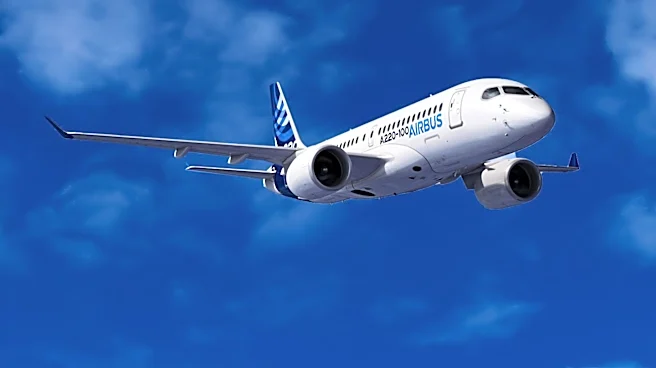
The Airbus A220 continues to demonstrate strong economic performance in the aviation market, despite ongoing challenges with engine support. Since its introduction by Swiss International Air Lines in 2016, the A220 has been praised for its fuel efficiency
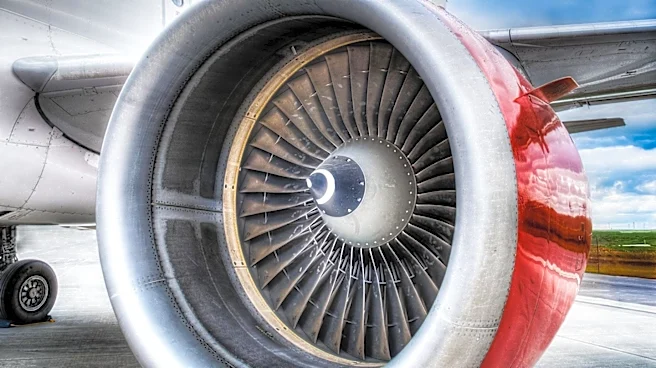
and passenger comfort. However, operators like Swiss, AirBaltic, and Delta Air Lines have faced issues with the availability of Pratt & Whitney PW1500G engines, leading to aircraft groundings and operational disruptions. Pratt & Whitney is working to improve engine availability and maintenance support, with enhancements to the engine's durability and performance.
Why It's Important?
The A220's ability to maintain its economic appeal despite engine challenges is significant for airlines seeking efficient and cost-effective aircraft. The ongoing engine issues highlight the complexities of integrating new technologies in aviation and the importance of robust support networks. For airlines, the A220's fuel efficiency and operational benefits remain attractive, but the engine challenges underscore the need for reliable maintenance solutions. The situation also emphasizes the role of manufacturers like Pratt & Whitney in ensuring the success of new aircraft models through continuous improvement and support.
What's Next?
Pratt & Whitney is expected to continue its efforts to enhance the PW1500G engine's performance and support network. Airlines operating the A220 will likely monitor these developments closely, as improved engine reliability could significantly impact their operational efficiency and fleet planning. The aviation industry will also watch for potential expansions of the A220 family, as Airbus considers larger variants to meet market demand. The resolution of engine challenges could strengthen the A220's position in the market, influencing future aircraft procurement decisions by airlines.