




What's Happening?
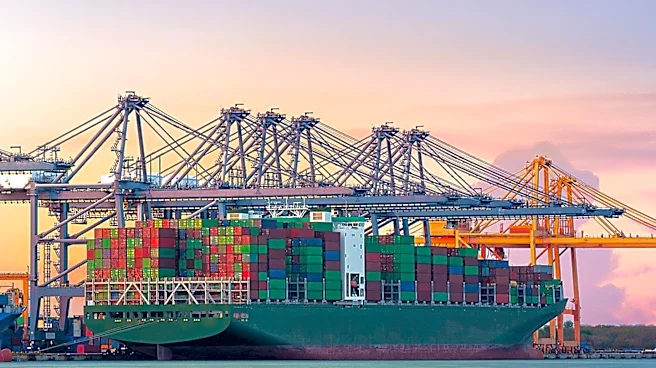
U.S. seaports are significantly investing in infrastructure and sustainable practices to meet the growing demand for heavy lift, special project, and breakbulk cargoes, particularly those related to clean energy. The Port of Baltimore has seen a 31% year-to-date
increase in breakbulk and project cargoes, including wind energy components and power generation machinery. The Port of Galveston completed a $106-million cargo infrastructure project, adding a new berth and nearly 30 acres for cargo handling, leading to a 46% increase in roll-on/roll-off cargo. The Port of San Diego is advancing projects for a new bulk sugar facility that will utilize electric trucks and a shore power system for vessels, aiming to import up to 280,000 metric tons of raw sugar annually with reduced emissions. These developments reflect a broader trend of U.S. ports adapting to evolving global market conditions and increasing cargo sizes.
Why It's Important?
These infrastructure investments and green initiatives at U.S. ports are crucial for several reasons. Economically, they are driving significant growth and job creation, as evidenced by the Port of Galveston's expansion paving the way for hundreds of new jobs. The ability to handle oversized and specialized cargo, such as wind turbine components, directly supports the expansion of the clean energy sector in the U.S., contributing to national energy independence and environmental goals. Environmentally, the adoption of shore power systems and electric vehicle fleets at ports like San Diego and National City Marine Terminal significantly reduces diesel emissions, improving air quality in surrounding communities and aligning with broader sustainability objectives. This modernization also enhances the competitiveness of U.S. ports in the global supply chain, allowing them to adapt to fluctuations in ocean freight rates and international shipping costs, and attract new types of cargo.
What's Next?
The Port of San Diego's bulk sugar facility project, involving California Sugar Equipment, is contingent on satisfying certain deliverables within eighteen months before a lease is signed and construction begins. This will lead to the construction of a 50,000-square-foot warehouse and the implementation of a bulk discharge unloader and conveyor system, along with a rooftop solar system for onsite truck charging. The Port of Galveston anticipates a pickup in wind turbine cargo in the second half of 2026, following a 66% decrease in the first half of the year. Further phases of infrastructure development are planned, including filling a second slip to add another six acres for cargo handling. These ongoing projects indicate a continued focus on expanding capacity and integrating sustainable technologies across U.S. port operations to meet future demands.
Beyond the Headlines
The strategic investments by U.S. ports in handling oversized cargo and implementing green technologies signify a deeper shift towards a more resilient and environmentally conscious national infrastructure. This trend extends beyond mere logistical improvements, reflecting a commitment to reducing the carbon footprint of maritime trade and fostering economic development that aligns with climate goals. The integration of electric vehicles and shore power systems at ports sets a precedent for other industries to adopt similar sustainable practices, potentially accelerating the transition to a greener economy. Furthermore, the focus on specialized cargo, particularly for renewable energy projects, positions U.S. ports as critical hubs in the global clean energy supply chain, influencing international trade patterns and technological advancements in logistics.