




What's Happening?
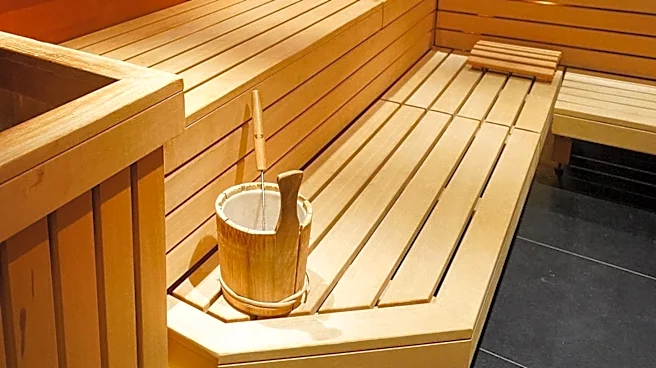
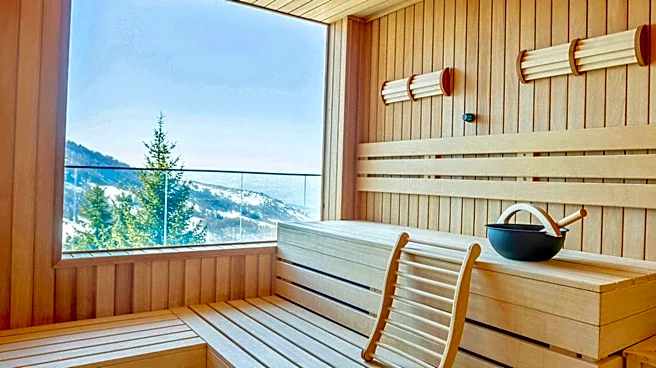
A new self-service infrared sauna, named Kindred Sauna, has recently opened at the Orland Community Center. Founded by long-time friends Danielle Reardon and Kim Burgess, the facility aims to provide accessible wellness and recovery options. Unlike traditional
saunas that heat the air through convection, infrared saunas use special heaters to emit infrared light, which directly warms the body. This allows infrared saunas to operate at lower ambient temperatures, typically between 110°F to 135°F, compared to traditional saunas which range from 150°F to 195°F. The lower temperature allows users to stay in the sauna for longer periods. The self-service model of Kindred Sauna, enabled by an online booking platform that provides a unique door code for entry, eliminates the need for constant upkeep or personnel, making it a practical choice for the community center.
Why It's Important?
The introduction of a self-service infrared sauna in a community center highlights a growing trend in accessible wellness solutions within the U.S. This model makes health and recovery services more convenient and potentially more affordable for a broader population. The distinction between infrared and traditional saunas, particularly regarding temperature and heating method, is crucial for consumers seeking specific health benefits or a more comfortable experience. The lower operating temperature of infrared saunas may appeal to individuals who find traditional saunas too intense, thereby expanding the demographic interested in sauna therapy. Furthermore, the self-service aspect reflects an increasing demand for flexible, on-demand wellness options that can be easily integrated into busy schedules, potentially influencing how other community-based health services are delivered.
What's Next?
Kindred Sauna plans to monitor the community's response and usage patterns to determine future expansion or service adjustments. The founders, Burgess and Reardon, hope that individuals will try the infrared sauna to experience its impact on their well-being, emphasizing that it is a form of self-care rather than just pampering. The success of this self-service model could encourage other community centers or wellness entrepreneurs to adopt similar accessible, technology-driven approaches to health services. Potential reactions from local health and wellness providers might include increased competition or collaboration to offer complementary services. The ease of incorporating infrared sauna sessions into daily routines could lead to a broader acceptance and integration of such therapies into mainstream wellness practices.
Beyond the Headlines
The opening of Kindred Sauna points to a broader cultural shift towards personalized and convenient wellness practices. The emphasis on 'self-care' and 'recovery' reflects a societal recognition of the importance of mental and physical well-being in an increasingly demanding world. The choice of infrared technology over traditional methods also suggests a preference for gentler, yet effective, health interventions. This development could trigger discussions about the role of technology in democratizing wellness, making services previously considered luxurious more attainable. It also raises questions about the evolving definition of community health resources, moving beyond traditional fitness centers to include specialized recovery and relaxation therapies. The ethical implications of self-service models, such as ensuring user safety and proper maintenance without constant supervision, will also be an ongoing consideration.