
What's Happening?
Citigroup strategists have downgraded U.S. equities from an 'overweight' to a 'neutral' rating. This decision stems from concerns regarding significant spending in the artificial intelligence (AI) sector
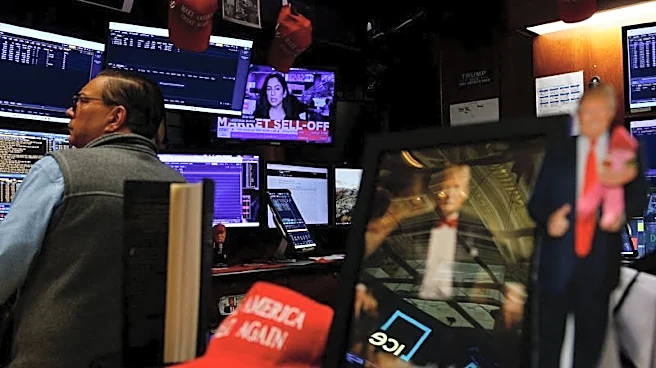
and the potential for increased regulation. The firm's strategists, led by Beata Manthey, expressed worry that positioning on key indices, such as the Nasdaq, could shift to net-short territory. This downgrade follows a substantial selloff in the market, which erased $3 trillion in stock market value from S&P 500 companies. Citigroup also reduced its outlook on global and European technology sectors from 'overweight' to 'neutral'. The recent U.S. midterm election results, which saw Democratic wins in states where there is growing opposition to new data centers, have intensified fears that stricter regulations could impede the expansion of AI infrastructure. This infrastructure buildout has been a primary driver of stock market highs this year. In contrast, Citigroup has upgraded its stance on European equities, excluding the UK, citing less exposure to tech volatility and greater sensitivity to declining oil prices. The firm also upgraded Global Health Care and European Food & Beverage sectors to 'overweight'.
Why It's Important?
This downgrade by a major financial institution like Citigroup signals a potential shift in investor sentiment towards U.S. equities, particularly those in the technology and AI sectors. A 'neutral' rating suggests that Citigroup no longer sees these assets as likely to outperform the broader market, which could lead to reduced investment flows into these areas. The concerns about AI spending and regulation highlight a growing apprehension about the sustainability of the current tech-driven market rally. If regulatory scrutiny increases, as suggested by the midterm election outcomes, companies heavily invested in AI infrastructure could face higher operational costs or slower expansion, impacting their profitability and stock valuations. This could also prompt a reallocation of capital from U.S. tech stocks to other regions or sectors, such as European equities or healthcare, which Citigroup has upgraded. The $3 trillion loss in S&P 500 market value underscores the sensitivity of the market to these concerns, indicating that investor confidence is fragile and susceptible to shifts in outlook from influential financial analysts.
What's Next?
The downgrade by Citigroup could prompt other financial institutions to re-evaluate their positions on U.S. equities, potentially leading to a broader shift in market sentiment. Investors may begin to adjust their portfolios, reducing exposure to U.S. technology and AI stocks in favor of sectors or regions deemed more stable or undervalued, such as European equities or healthcare. The focus will likely intensify on upcoming regulatory discussions and potential legislative actions concerning AI infrastructure and data centers, especially in states where opposition has grown. Companies in the AI sector may need to prepare for a more challenging regulatory environment, which could affect their growth projections and investment strategies. The market will also be closely watching for further volatility, as Citigroup noted that volatility has become more broad-based across regions and sectors. Future earnings reports from major tech companies will be scrutinized for any signs of slowing growth or increased costs related to AI investments or regulatory compliance.
Beyond the Headlines
The concerns raised by Citigroup extend beyond immediate market fluctuations, touching upon the broader implications of rapid technological advancement and its societal integration. The push for increased regulation in the AI sector reflects a growing public and political awareness of the potential impacts of AI, including data privacy, ethical considerations, and energy consumption from data centers. This could signal a long-term trend where technological innovation is increasingly balanced with regulatory oversight, potentially reshaping the landscape for tech companies. The shift in investment focus away from U.S. tech could also indicate a re-evaluation of global economic leadership, with other regions gaining favor if they are perceived as offering more stable or less regulated investment environments. This development highlights the complex interplay between technological progress, market dynamics, and governmental policy, suggesting a future where the unchecked growth of certain industries may face greater scrutiny and control.