








What's Happening?
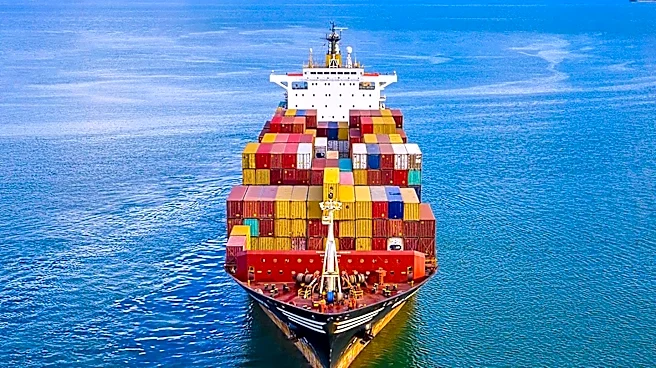
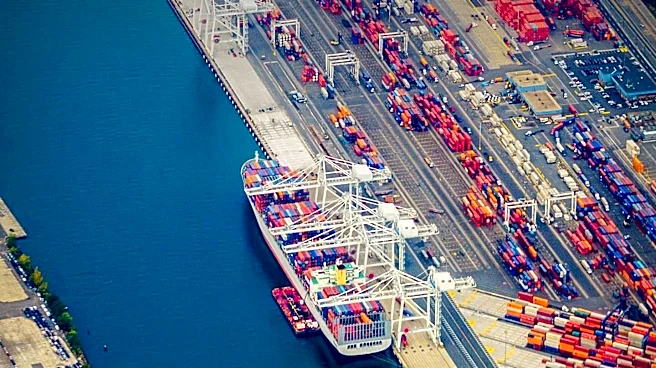
The ocean shipping industry is grappling with volatile market conditions due to geopolitical tensions and congestion at key transshipment ports. Major carriers like CMA CGM and Maersk have reported declines in profits, while operational bottlenecks persist
at ports in India and the UAE. Spot rates on China-to-U.S. West Coast routes have increased significantly due to congestion and disruptions in the Middle East. The report highlights concerns about capacity and fuel surcharges as peak season approaches.
Why It's Important?
The challenges facing the ocean shipping industry have significant implications for global trade and the U.S. economy. Geopolitical tensions and congestion can lead to increased transportation costs and delays, impacting supply chain efficiency. The report underscores the importance of strong relationships with carriers and the need for shippers to implement independent bunker adjustment policies to manage fuel costs. These challenges highlight the need for resilience and adaptability in the logistics industry.
What's Next?
As peak season approaches, shippers are advised to build additional buffer time into their supply chains and prioritize reliable carrier relationships to mitigate the risk of delays. The report suggests that geopolitical uncertainty and congestion will continue to create a challenging environment for ocean shipping. Shippers will need to closely monitor fuel surcharges and ensure they remain aligned with market-based indices to avoid double billing. The industry's ability to navigate these challenges will be crucial for maintaining supply chain stability.