
What's Happening?
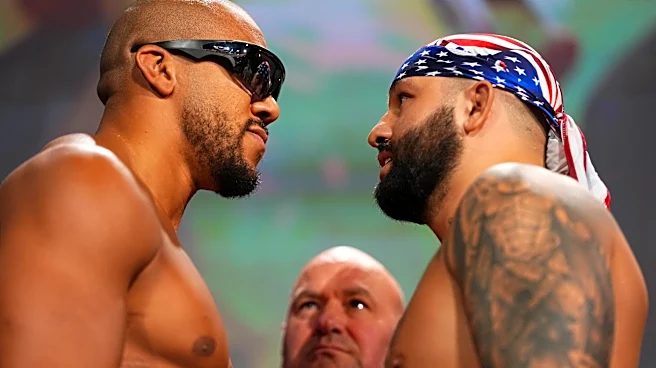
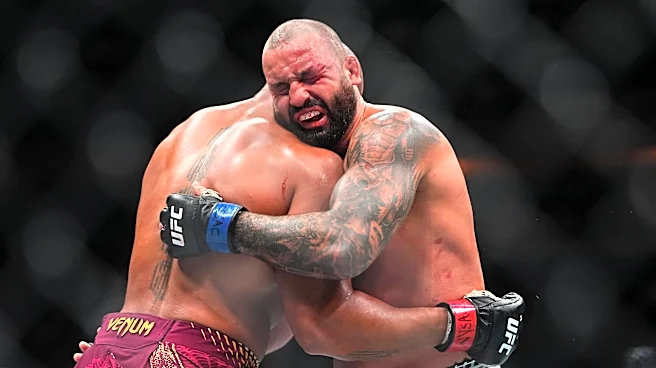
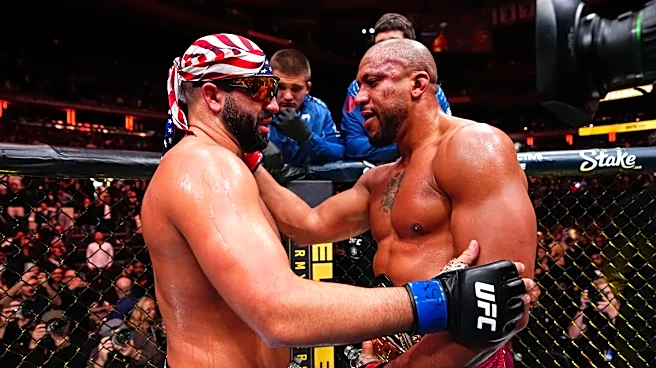
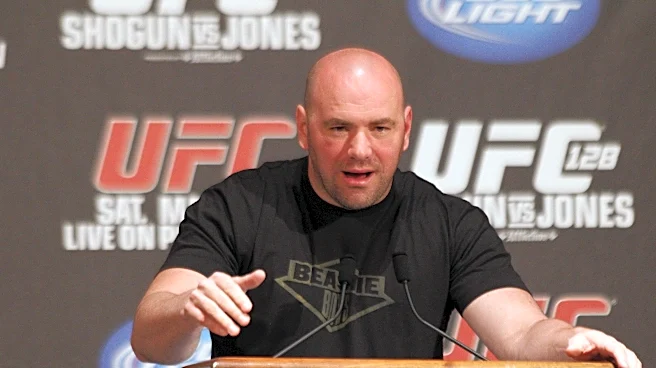
UFC President Dana White has expressed disagreement with the official judges' scoring of the heavyweight title fight between Ciryl Gane and Josh Hokit at UFC 334. The bout, held at Madison Square Garden
in New York, saw Gane retain his title via unanimous decision with scores of 48-47 from all three judges. However, White stated during the post-fight press conference that he personally scored the fight 4 rounds to 1 in favor of Gane, a more decisive victory than reflected by the judges. He acknowledged the incredible pace set by Hokit but emphasized that significant strikes were twice as numerous for Gane in each round, despite total strike statistics not fully telling the story of the fight.
Why It's Important?
Dana White's public disagreement with the judges' scoring is significant as it highlights ongoing debates within the UFC and the broader combat sports community regarding judging consistency and criteria. Such statements from the organization's president can fuel discussions about potential reforms or increased scrutiny of judging panels. For fighters, inconsistent scoring can impact career trajectories, title opportunities, and financial earnings. It also affects fan perception, potentially leading to frustration and calls for greater transparency or alternative scoring methods. This incident underscores the subjective nature of judging in mixed martial arts and its critical role in determining fight outcomes and fighter legacies.
What's Next?
While the official result of Ciryl Gane's victory stands, Dana White's comments may prompt further internal review or discussion within the UFC regarding judging standards. It could also lead to increased pressure on judges to provide more consistent and transparent scoring in future events. For Josh Hokit, despite the loss, White's acknowledgment of his performance and pace might bolster his standing and potentially lead to other significant matchups, or even a future rematch if there is sufficient public demand. The debate over judging will likely continue to be a prominent topic among fans, media, and fighters in the lead-up to upcoming UFC events.
Beyond the Headlines
This incident touches upon the inherent challenges of judging combat sports, where subjective interpretation of various factors like striking, grappling, control, and aggression must be weighed in real-time. The discrepancy between White's personal score and the official judges' cards reveals a deeper tension between the objective statistics of a fight and the subjective experience of watching it unfold. It also raises questions about the influence of an organization's president on public perception of fight outcomes and the potential for such comments to shape narratives around fighter performances. Ultimately, it contributes to the ongoing dialogue about fairness and accuracy in professional sports judging.