






What's Happening?
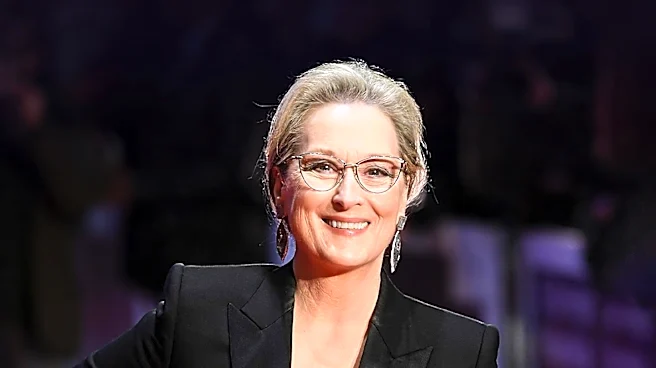
Meryl Streep was cast in the 1985 Oscar-winning film 'Out of Africa' after Audrey Hepburn, the initial choice for the lead role, ultimately declined. Producer Anna Cataldi, who adapted Karen Blixen's memoirs for the film, had approached Hepburn in 1977.
Hepburn expressed interest and was knowledgeable about Blixen's pen name, Isak Dinesen. She made several demands, including meeting with director Fred Zinneman and later traveling to Los Angeles to convince her agent, Kurt Frings. However, Frings was against Hepburn taking on what he called a 'stupid adventure movie,' believing she would not do another film. Despite Hepburn remaining the studio's first choice at Columbia Pictures, the stars did not align, leading director Sydney Pollack to cast Meryl Streep. Streep subsequently earned an Oscar nomination for her performance in the film, which went on to win 'Best Picture,' 'Best Director,' and five other Academy Awards.
Why It's Important?
This casting decision significantly impacted the trajectory of 'Out of Africa,' leading to its critical and commercial success, including multiple Academy Awards. Meryl Streep's involvement solidified her reputation as a versatile and acclaimed actress, further establishing her as a leading figure in Hollywood. Had Audrey Hepburn taken the role, the film's artistic direction and public reception might have been different, potentially altering its historical standing in cinema. The story highlights the complex dynamics between producers, directors, agents, and actors in the film industry, where personal preferences and professional advice can dramatically influence a project's outcome. It also underscores how a single casting choice can be pivotal in a film's journey to becoming an iconic piece of cinematic history.
What's Next?
While this event is historical, it continues to be a point of interest in film history discussions, particularly regarding casting choices and their impact on a film's legacy. For Meryl Streep, her career continued to flourish, leading to numerous other acclaimed roles and awards. For Audrey Hepburn, her decision to largely remain in retirement after 1967's 'Wait Until Dark' meant 'Out of Africa' became one of the roles she reportedly regretted not taking. The film itself remains a classic, frequently re-evaluated in the context of its production and the performances that defined it. Future analyses of Hollywood's golden age and the careers of its stars will likely continue to reference such pivotal moments in casting.
Beyond the Headlines
The narrative surrounding 'Out of Africa' and Audrey Hepburn's near-involvement delves into the broader theme of an actor's legacy and the choices that shape it. Hepburn's self-imposed retirement and selective return to acting reflect a desire for a life beyond the constant demands of Hollywood, a sentiment not uncommon among highly successful individuals. Her agent's protective stance, though ultimately preventing her from a critically acclaimed role, highlights the complex relationship between talent and representation. This situation also underscores the 'what if' scenarios that often permeate discussions of film history, where a different decision could have altered not only a film's outcome but also the public perception of an actor's career. It serves as a reminder that even the most iconic figures face career-defining choices that can lead to both triumphs and regrets.