







What's Happening?
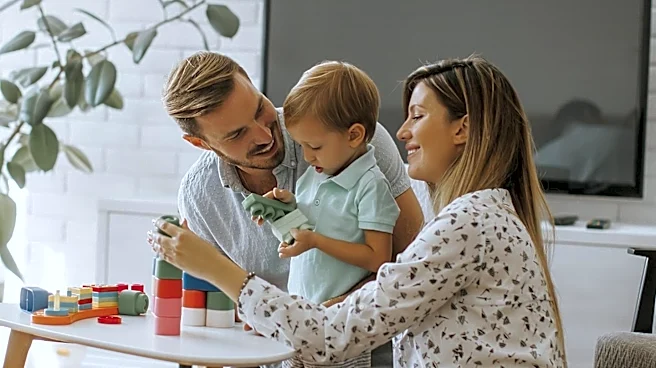
Millennials, a generation that has shown hesitation in starting families due to evolving social and economic landscapes, are redefining what constitutes a 'good upbringing' once they become parents. According to YourTango, this generation places significant
emphasis on their children's mental health, confidence, and autonomy. Unlike previous generations, millennials are inclined towards a 'gentle parenting' style, focusing on support rather than strict discipline. They encourage their children to ask questions, fostering self-understanding and a broader comprehension of the world. This approach signifies a shift from traditional hierarchical parenting to a more collaborative partnership with their children, aiming to empower them rather than simply dictating actions. This contrasts with Baby Boomers who balanced strict guidance with making children feel their opinions mattered, and Gen X who, having experienced minimal supervision, became 'stealth-fighter parents' who are present and supportive without being overly involved.
Why It's Important?
This shift in millennial parenting philosophy holds significant implications for future societal norms and child development. By prioritizing mental health and emotional well-being, millennials are likely to raise a generation that is more emotionally intelligent and self-aware. The emphasis on autonomy and critical thinking could foster greater innovation and adaptability in future generations, potentially influencing educational systems and workplace dynamics. This approach also challenges traditional disciplinary methods, which could lead to broader discussions about effective child-rearing practices and their long-term psychological impacts. The focus on partnership over authoritarianism may also contribute to stronger parent-child relationships, potentially reducing intergenerational conflict and fostering more open communication within families. This generational approach to parenting reflects broader societal changes, including increased awareness of mental health issues and a desire for more equitable relationships.
What's Next?
The long-term effects of millennial parenting styles will become more apparent as their children mature. Future research will likely explore the outcomes of this gentle, autonomy-focused approach on children's academic performance, social skills, and overall well-being. There may be a continued evolution in educational methodologies to align with these parenting values, potentially leading to more child-centered learning environments. Furthermore, as these children enter adulthood, their unique perspectives and values, shaped by their upbringing, could influence political landscapes, consumer behaviors, and cultural trends. Other generations, like Gen Z who are new to parenting, are already observing and adapting elements from millennial approaches, suggesting a continuous evolution of parenting styles that prioritize individual child needs and emotional support.
Beyond the Headlines
The millennial approach to parenting extends beyond individual family units, reflecting a broader cultural shift towards valuing emotional intelligence and individual expression. This generation's experiences with economic instability and rapid technological change have likely informed their desire to equip their children with resilience and adaptability, rather than just obedience. The rejection of purely disciplinary methods could also be seen as a response to past parenting styles that may have inadvertently stifled creativity or emotional expression. This trend highlights a growing societal recognition of the importance of mental health from an early age, potentially leading to increased demand for mental health resources for children and families. It also underscores a generational desire to break cycles of traditional authority, fostering a more egalitarian and understanding approach to human relationships, starting within the family.