




What's Happening?
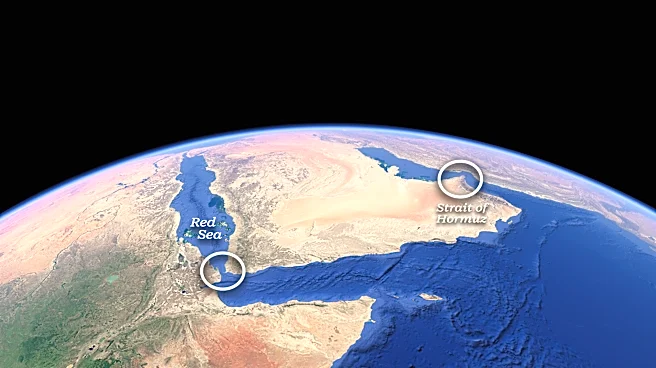
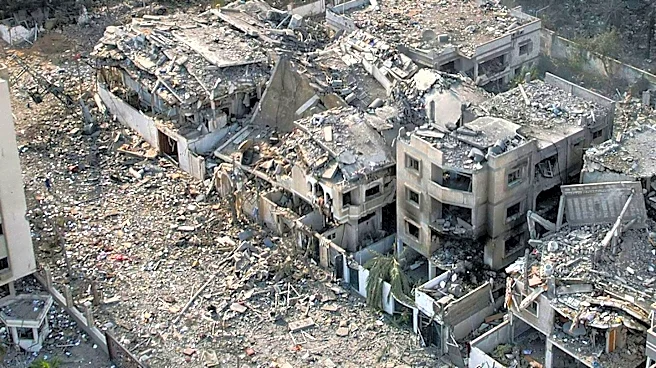
WTI crude oil prices have surged as tensions in the Middle East escalate, impacting key shipping routes. The U.S.-Iran conflict has intensified, with Iran's Revolutionary Guards claiming control over the Strait of Hormuz, a critical oil transit route.
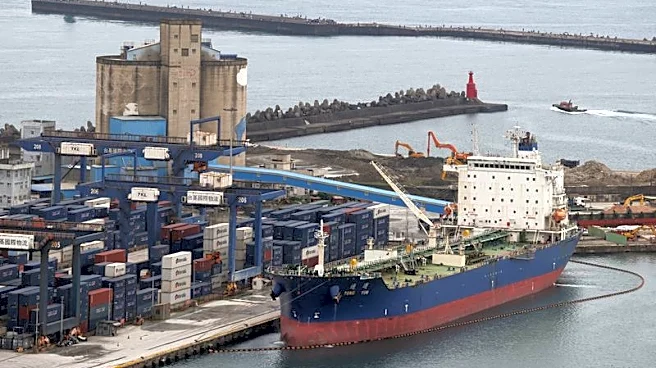
The situation has been exacerbated by attacks on Saudi oil tankers near the Bab el-Mandeb strait, further threatening oil supply routes. As a result, WTI crude oil futures have risen significantly, reflecting the market's concerns over potential supply disruptions and increased shipping costs.
Why It's Important?
The surge in WTI crude oil prices highlights the vulnerability of global oil supply chains to geopolitical tensions. The Strait of Hormuz and Bab el-Mandeb are crucial chokepoints for oil transportation, and disruptions in these areas can lead to significant supply shortages and price volatility. The situation underscores the importance of geopolitical stability for energy markets and the potential economic impact of prolonged conflicts. Higher oil prices can lead to increased costs for consumers and businesses, affecting economic growth and inflation.
What's Next?
The market will be closely monitoring developments in the Middle East, particularly any changes in the U.S.-Iran conflict and the security of key shipping routes. A credible ceasefire or diplomatic resolution could alleviate pressure on oil prices, while continued tensions may lead to further price increases. Traders and investors will also be watching for any changes in global oil supply and demand dynamics, as well as potential policy responses from major oil-producing countries. The situation remains fluid, and market participants are advised to stay informed and prepared for potential volatility.