







What's Happening?
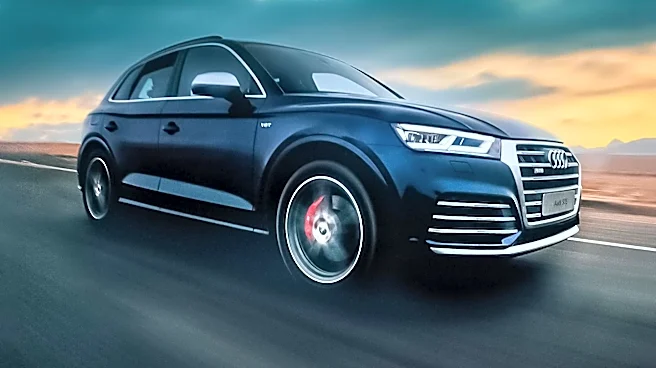
Spotify has introduced a new native in-car application for Audi vehicles, allowing users to access its music and podcast streaming services directly through the car's infotainment system. This integration, which went live on October 21, offers an alternative
to phone-projection systems like Apple CarPlay and Android Auto. Built on Google's Android Automotive operating system, the app runs on the car's hardware, eliminating the need for a phone connection via Bluetooth or cable. Audi is the first automaker to launch Spotify's fully native in-car app, with plans for more automotive partnerships in the coming year. The app is available in five Audi models: the electric A6 e-tron and Q6 e-tron, and the A5, Q5, and A6 from model year 2026, with upcoming Q7 and Q9 SUVs also set to receive it. Both Spotify Free and Premium users can access the app, though an Audi connect package may be required depending on the vehicle and market.
Why It's Important?
This development signifies a notable shift in how digital entertainment services are integrated into the automotive industry, particularly within the U.S. market. By offering a native app, Spotify gains greater control over the user experience, enabling features specifically designed for in-car use, such as music videos, real-time lyrics, Spotify DJ, and Spotify Jam. This enhances convenience and safety for U.S. drivers and passengers by reducing reliance on mobile devices while driving. For the automotive sector, this partnership could set a precedent for deeper integration of third-party applications, potentially influencing future vehicle design and infotainment system development. It also highlights the growing competition among tech and auto companies to capture the in-car entertainment market, impacting consumer choices and driving innovation in connected car technologies across the U.S.
What's Next?
Spotify plans to expand its native in-car app to more automotive partners over the next year, indicating a broader strategy to embed its services directly into vehicles. This move suggests that built-in car systems could become an increasingly crucial channel for streaming platforms to reach listeners in the U.S. and globally. Audi's upcoming Q7 and Q9 SUVs will also feature the app, further solidifying this trend. While Spotify remains committed to phone projection systems like CarPlay and Android Auto, the native app offers an additional, more integrated option. Consumers can anticipate more advanced and seamless in-car entertainment experiences as this technology evolves, potentially leading to new subscription models or feature sets tailored for automotive use.
Beyond the Headlines
The launch of Spotify's native app in Audi vehicles represents a deeper convergence of the automotive and digital entertainment industries. This integration moves beyond mere smartphone mirroring, allowing for a more immersive and context-aware user experience within the vehicle. The ability to access features like music videos and lyrics on passenger displays, while restricting them on the driver's screen during motion, highlights a sophisticated approach to safety and user engagement. This trend could lead to new ethical considerations regarding data privacy and content consumption within vehicles, as well as potential regulatory discussions on driver distraction. Furthermore, it underscores the increasing importance of software and digital services as differentiating factors in the competitive U.S. automotive market, potentially influencing consumer expectations for future vehicle purchases.