
What's Happening?
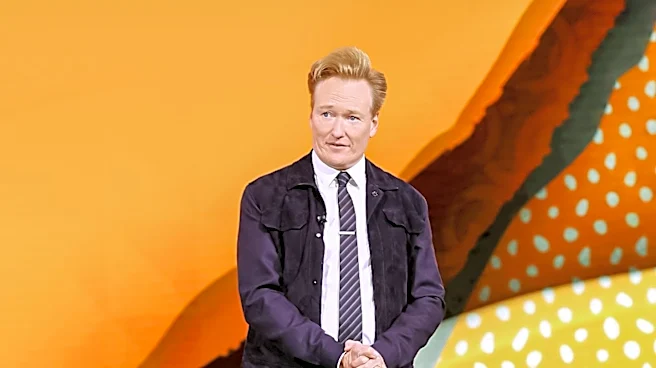
Conan O'Brien, a veteran of late-night television, recently discussed the significant changes in the television industry, particularly regarding the financial support and perks once afforded to writers
at major networks like NBC. Speaking at Bloomberg's Screentime Conference, O'Brien recalled a time when NBC was exceptionally generous, allowing writers on his late-night show to order expensive meals, including 'lobster and champagne.' He noted that this era of lavish spending, which he described as the network 'making money hand over fist,' has long since passed. O'Brien, who worked at NBC from 1993 until 2010, observed a gradual shift towards more cost-conscious operations during his 17 years there. He attributes this change to the rise of subscription cable channels like HBO and Cinemax, which began to fragment the television audience and revenue streams, long before the advent of streaming services further transformed the landscape.
Why It's Important?
This shift highlighted by Conan O'Brien is significant as it underscores the profound economic transformation within the U.S. television industry. The decline in network profitability and the subsequent reduction in spending on production and talent directly impact the creative ecosystem. For writers and other production staff, this means fewer lucrative opportunities and potentially less creative freedom, as budgets become tighter. The move from an advertising-driven model to a subscriber-based one, now with a re-introduction of ad-supported tiers on streaming platforms, reflects a continuous struggle for sustainable revenue. This evolution affects not only the financial well-being of those in the industry but also the quality and type of content produced, as networks and streamers prioritize cost-efficiency over previous indulgences. The anecdote serves as a historical marker of a bygone era of television production, illustrating how economic pressures reshape creative industries.
What's Next?
The trend of increased cost-consciousness in television production is expected to continue, with networks and streaming platforms constantly seeking ways to optimize budgets. This could lead to further consolidation in the industry, more reliance on international co-productions, and a continued emphasis on data-driven content creation to maximize subscriber engagement and advertising revenue. Writers and other creative professionals may face ongoing challenges in securing traditional, long-term employment with the same level of benefits and compensation seen in previous decades. The industry will likely continue to experiment with various business models, including hybrid subscription-ad models, to adapt to changing viewer habits and economic realities. The 'unexpected consequences,' both positive and negative, that O'Brien mentioned suggest an ongoing period of flux and innovation as the industry seeks its next stable form.
Beyond the Headlines
Beyond the immediate financial implications, O'Brien's reflections touch upon broader cultural and ethical dimensions of creative work. The era of 'lobster and champagne' symbolized a period when creative talent was highly valued and generously supported, fostering an environment where experimentation and risk-taking could thrive. The current landscape, driven by stringent budgets and performance metrics, might inadvertently stifle creativity and lead to more formulaic content. This raises questions about the long-term impact on artistic expression and the diversity of voices in media. The shift also highlights the precarious nature of creative careers, where economic stability can fluctuate dramatically with industry changes. It prompts a re-evaluation of how creative labor is valued and compensated in an increasingly competitive and cost-sensitive media environment, potentially leading to new models for artist support and intellectual property rights.