




What's Happening?
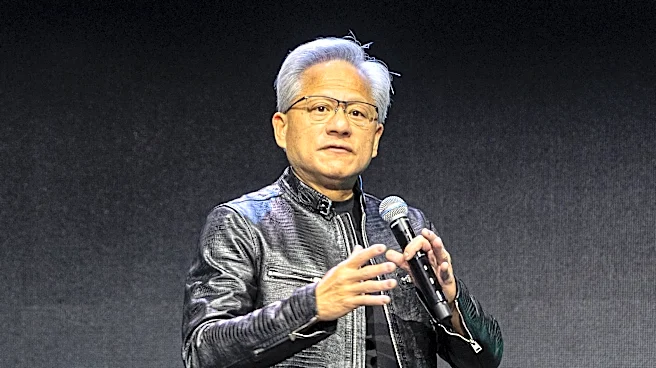
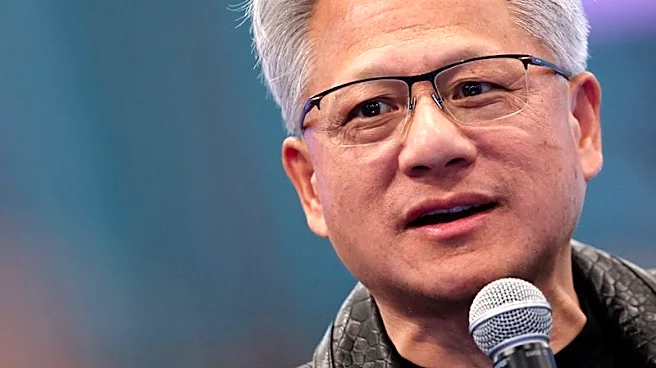
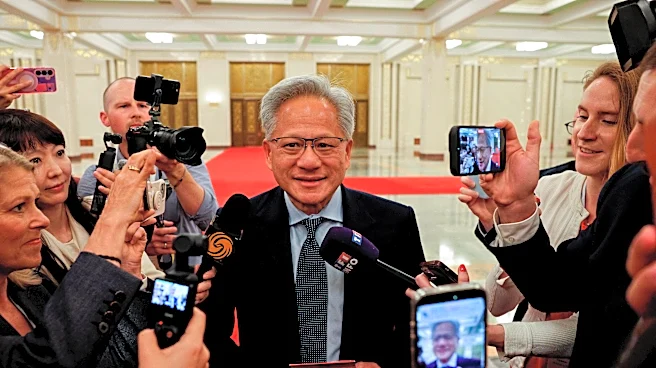
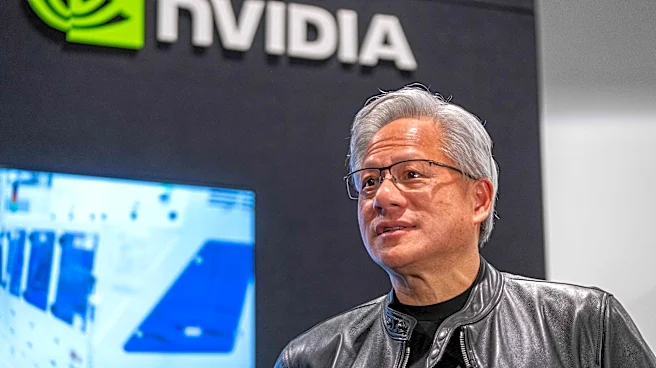
Jensen Huang's resignation as CEO of Nvidia on November 12, 2026, reportedly led to a significant drop in the company's market value, exposing the AI industry's substantial reliance on key individuals. Control Risks, a global risk consultancy, emphasizes
the importance of treating critical-person dependencies within firms and at key suppliers with the same rigor as technology and infrastructure risks. Huang, as a founder-CEO, led Nvidia for over three decades, maintaining a flat organizational structure with numerous direct reports and no publicly disclosed succession plan. His departure followed reports of an alleged foreign intelligence approach, though Nvidia's board stated it found no reason to believe sensitive information was compromised. The incident underscores that while leadership changes do not automatically cause operational disruption, the centrality of Nvidia in many corporate sectors means its leadership crisis has broader implications.
Why It's Important?
The departure of a pivotal figure like Jensen Huang from Nvidia highlights a systemic vulnerability within the rapidly evolving AI industry: critical-person risk. This risk arises when technical knowledge, commercial relationships, and decision-making authority are heavily concentrated in a few individuals. Such dependencies can impact national competitiveness, strategic capability, and corporate resilience across the entire AI ecosystem. Given Nvidia's foundational role in supplying chips and computing power for numerous AI applications, a leadership vacuum or instability at the company can send ripple effects throughout various sectors. The incident serves as a warning that while organizations assess concentration risks in terms of chips, compute, cloud, and models, they often overlook the human element. This oversight can lead to significant disruptions, as the continuity of supply for many single-vendor products and multi-year compute commitments are highly contingent on the stability of leadership and key personnel.
What's Next?
Organizations are advised to implement robust frameworks for assessing critical-person risk, both internally and across their supply chains. This includes identifying critical individuals beyond senior leadership, understanding their unique knowledge, access, relationships, and authority, and planning for continuity in their absence. Companies should also evaluate potential adversaries who might seek to influence or compromise these critical individuals and assess exposure across digital, physical, professional, and personal environments. Boards are urged to add critical-person risk to their risk registers and report findings to relevant committees. The broader AI industry may see an increased focus on succession planning, executive protection, and the decentralization of critical knowledge and relationships to build greater resilience against such shocks. This could lead to more structured leadership development programs and enhanced security protocols for key personnel.
Beyond the Headlines
The incident at Nvidia brings to light deeper ethical and security dimensions within the AI industry. The alleged foreign intelligence approach underscores the geopolitical significance of technological leadership and the potential for state and non-state actors to target key individuals for strategic advantage. This extends beyond CEOs to engineers, researchers, and even support staff who hold valuable technical knowledge or access. The reliance on a few 'rock-star' founders and innovators, while often driving rapid progress, creates single points of failure that can be exploited. This situation prompts a re-evaluation of how companies protect their intellectual capital and human assets in an increasingly competitive and espionage-prone global environment. It also raises questions about the long-term sustainability of business models heavily reliant on individual genius rather than institutionalized knowledge and distributed leadership, potentially pushing the industry towards more resilient, team-based innovation structures.